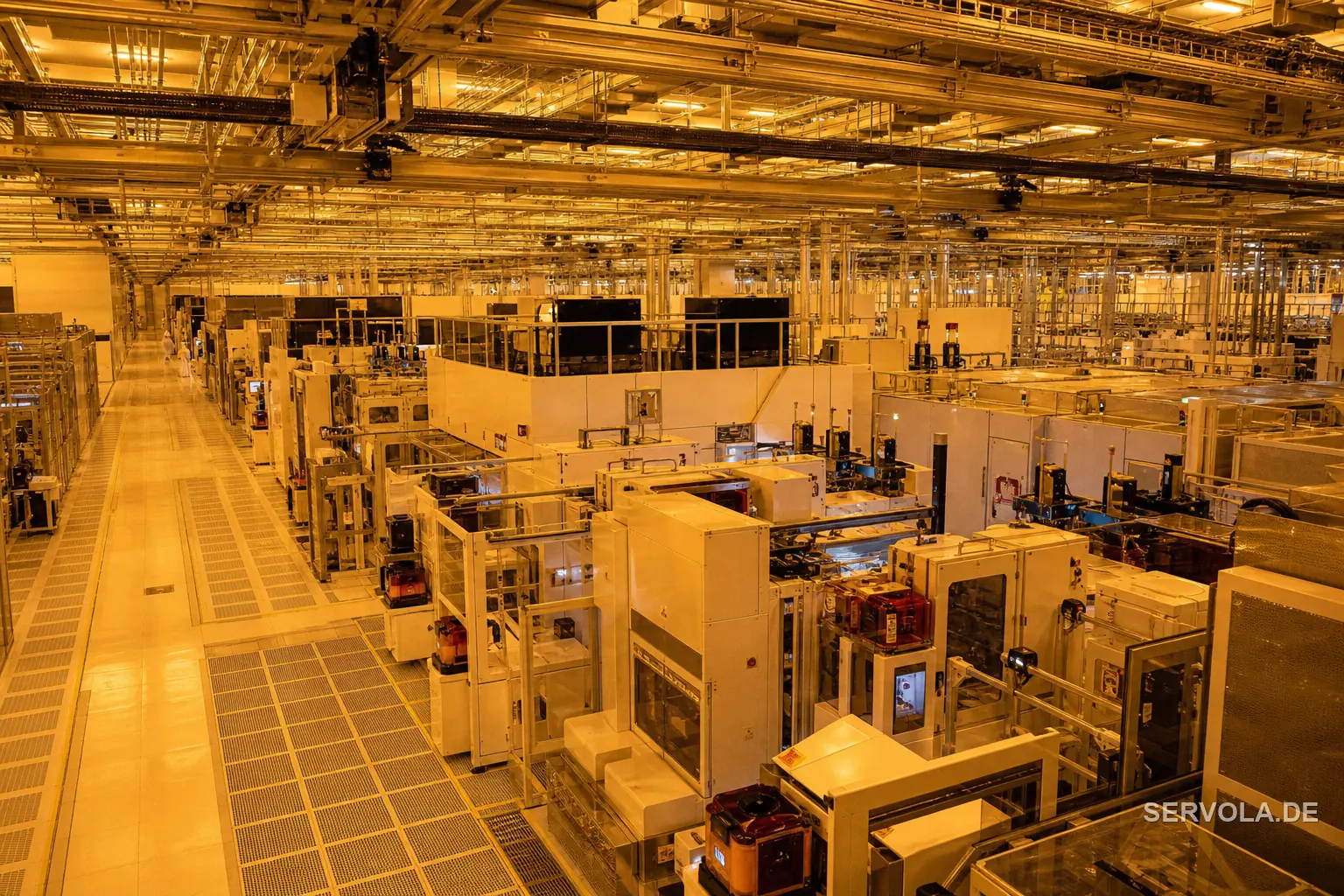
A Small Round, an Existing Customer List
SweGaN announced on August 17 that it had closed a Series B round of 14 million dollars, 12.09 million euros, led by Thisbe AB and North Ventures, with existing shareholders also participating. That brings the Linkoping-based company's total funding to 41 million dollars since founding. SweGaN's own CFO, Stefan Axelsson, called it an up-round, the company's language for a raise priced above its previous valuation, though neither SweGaN nor its investors disclosed the actual number.
What separates this raise from a typical early-stage semiconductor round is that SweGaN is not funding a first product. The company already sells gallium nitride on silicon carbide epitaxial wafers to customers that include Ericsson, Saab and Chalmers University of Technology, largely for power-amplifier work tied to 6G research. This is expansion capital for a business with paying customers, not seed money for a lab result.
Why a Wafer Material Matters Beyond the Lab
Gallium nitride on silicon carbide is not a consumer-facing product, but it sits underneath several things a European operator does care about. GaN-based power electronics run more efficiently at higher frequencies than the silicon they replace, which is why they show up in EV fast chargers, 5G and 6G base station power amplifiers, and increasingly in the power-conversion stages of data centers, where every efficiency point matters as AI compute pushes electricity demand higher.
That last use case is the one worth watching. As data-center operators and utilities across Europe grapple with rising power demand from AI workloads, the components that convert and manage that power efficiently are not a side detail, they are part of the cost and capacity equation. A wafer supplier feeding that chain is adjacent to a story this outlet has covered repeatedly this year: European grid capacity and data-center power are becoming a genuine constraint on how fast AI infrastructure can be built.
The Procurement Argument, Not the Venture One
For most readers, a 12 million euro Series B in a Swedish deep-tech company is not itself the story. The reason it belongs on a procurement radar is geography: GaN wafer manufacturing today concentrates among a small number of producers based in Asia and the United States. A funded, revenue-generating European alternative does not replace that supply chain, but it gives a hardware, telecom or data-center buyer doing supplier diversification a second name to call, backed by customers that already include a major European telecom equipment maker and a defense contractor.
That is the practical takeaway for a European hardware or infrastructure team: this is not a company to invest in from this article, it is a supplier worth adding to a sourcing shortlist the next time a GaN-based component contract comes up for renewal, particularly for teams already thinking about supply-chain concentration risk under the EU's broader chip-sovereignty push.
Read next: Huawei's Nvidia-Rival Chip Arrives Nine Months Early | Washington Weighs Tariffs on Laptops, Not Just Chips