One Team Now Builds What Thirty Companies Were Duplicating
Fusionality, a seven-person startup in Lausanne, has raised a CHF 3 million (about $3.7 million) pre-seed round co-led by the Swiss venture firms Founderful and Playfair, to sell fusion companies the control software they have each been building alone.
The company's bet rests on a specific, unglamorous fact: every one of the more than 30 privately funded companies now building magnetic-confinement fusion devices worldwide has to solve the same problem before their reactor ever produces a watt of electricity. Each must measure the state of a plasma heated past 100 million degrees Celsius, turn those measurements into an understanding of what the plasma is doing, and then steer the reactor's heating, fueling, and magnet systems to act on that understanding within milliseconds. Miss the window and the plasma disrupts, which can damage the machine.
Fusionality's founders argue that roughly 80 percent of this operations infrastructure code is functionally identical across every company's reactor design, no matter how different the physics approach. Today, almost all of them are writing it from zero.
| Fact | Figure |
|---|---|
| Round size | CHF 3 million (about $3.7 million), pre-seed |
| Lead investors | Founderful and Playfair |
| Team size at close | 7 employees, based in Lausanne |
| Private fusion companies worldwide | more than 30 |
| Shared code across reactor designs, by founder estimate | about 80 percent |
| Plasma temperature the system must track | above 100,000,000 degrees Celsius |
Two DeepMind Engineers Who Already Solved It Once
Federico Felici and Jonas Buchli are not newcomers to this specific problem. Felici holds a PhD in plasma physics from EPFL and spent two and a half years at Google DeepMind after running control research at EPFL's Swiss Plasma Center. Buchli, an electrical engineer who previously held a faculty position at ETH Zurich, led DeepMind's work on reinforcement learning for physical control systems.
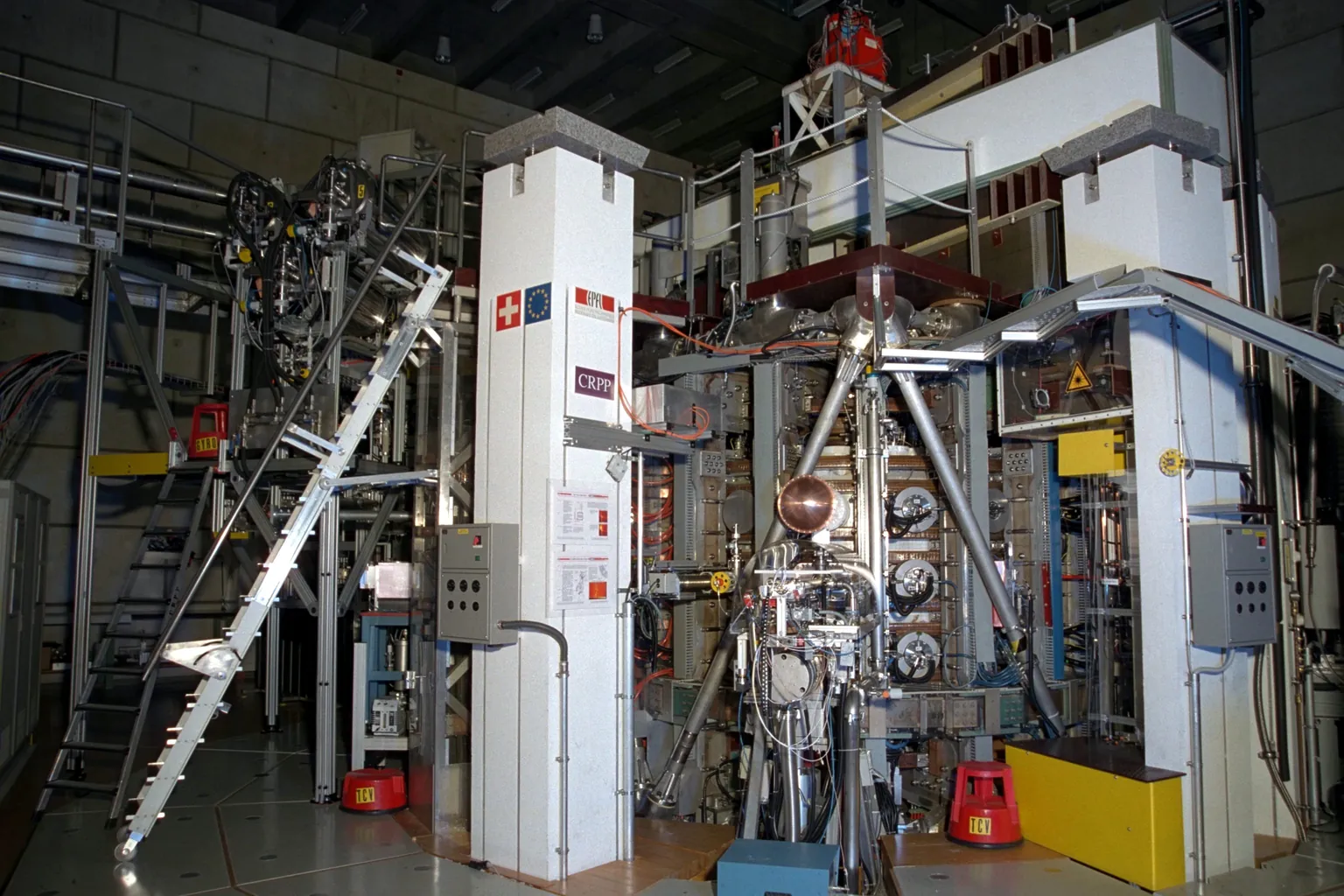
The two met while using an AI system to control EPFL's TCV tokamak, a collaboration between EPFL and Google DeepMind that produced a widely cited 2022 paper in Nature on magnetic control of tokamak plasmas through deep reinforcement learning. That project proved AI could steer a real reactor in real time. Fusionality is the more mundane sequel: building the plumbing that makes any control system, AI-driven or not, reliable enough for a company that cannot afford a scrapped experimental run.
"Operating a fusion device is a challenging problem where multiple sources of data, different time scales, and complex plasma behavior come together," said Jonas Buchli, Fusionality's co-founder and CTO. Felici has said AI will "play an important role in future control systems" but is more likely to enhance specific functions than to run a reactor unsupervised.
This Looks Like the Chip Industry's Equipment Makers, Not Its Chipmakers
Servola's read of this raise is not about the reactor race everyone already tracks - Commonwealth Fusion Systems, Proxima Fusion, Type One Energy, and dozens of others racing toward a demonstration plant. It is about what a supplier market appearing underneath that race actually signals.
When an industry is still young, every company builds everything itself because no shared layer exists yet to buy instead. When a supplier can walk in and say a majority of that code is identical across customers, it means the industry has enough companies, and enough of them are stuck on the same non-differentiating problem, that specializing is now cheaper than duplicating. That is close to the shift the semiconductor industry went through decades ago: the companies that make chipmaking equipment, not the chipmakers themselves, ended up capturing outsized, durable value because every chipmaker needed the same tools regardless of whose chip design won.
Fusion investors have mostly bet on which reactor design gets to net energy gain first. A software layer this early is a bet on a different question entirely: which fusion companies stop wasting engineering budget on a solved problem, and which ones keep paying to reinvent it.
What an Energy Buyer Should Actually Watch Here
Fusion power is still, honestly, a decade or more from any European grid connection, and this round changes nothing about that timeline. What it changes is a much nearer-term signal for anyone tracking whether the fusion sector is a durable industrial category or a cluster of well-funded science experiments.
A specialized supplier market is one of the clearest tells that an industrial sector has moved past its experimental phase, the same tell that shows up in EU battery manufacturing, grid hardware, and semiconductor supply chains once they mature. For an energy buyer or industrial policy planner watching where fusion capital is actually going, which fusion companies choose to buy this layer instead of building it themselves is now a usable proxy for which teams are spending their capital on the physics problem that matters, rather than on infrastructure that does not differentiate them at all.
Fusionality's own next move will say almost as much as its raise did: the money is earmarked to build out its Lausanne team and land its first paying customers, not to expand technically. Whether real fusion companies actually buy instead of build is the test this thesis has to pass next.
Read next: Google's Biggest AI Export Is Founders, Not Models | A Safety Pledge Just Became Antitrust Exhibit A