The Round: 700 Million Dollars in a Month of Doubling
On 18 August 2026, Etched announced a $700 million funding round led by quantitative trading firm Jane Street, valuing the AI chip startup at $21 billion (roughly EUR 19.3 billion). Kleiner Perkins, Sequoia Capital, Andreessen Horowitz, Peter Thiel, Tiger Global, Bain Capital Ventures, Neo, Stripes, Primary, Positive Sum, Diffusion, Argo, and Blackstone also joined the round.
That is just one month after a $300 million Series C in July 2026 valued Etched at $10.3 billion, meaning the valuation doubled in four weeks. TechCrunch's own headline put it plainly: Etched's valuation doubles to $21B in a month, an unusually fast pace for a round of this size.
Why Jane Street's Signature Is Different From a Term Sheet
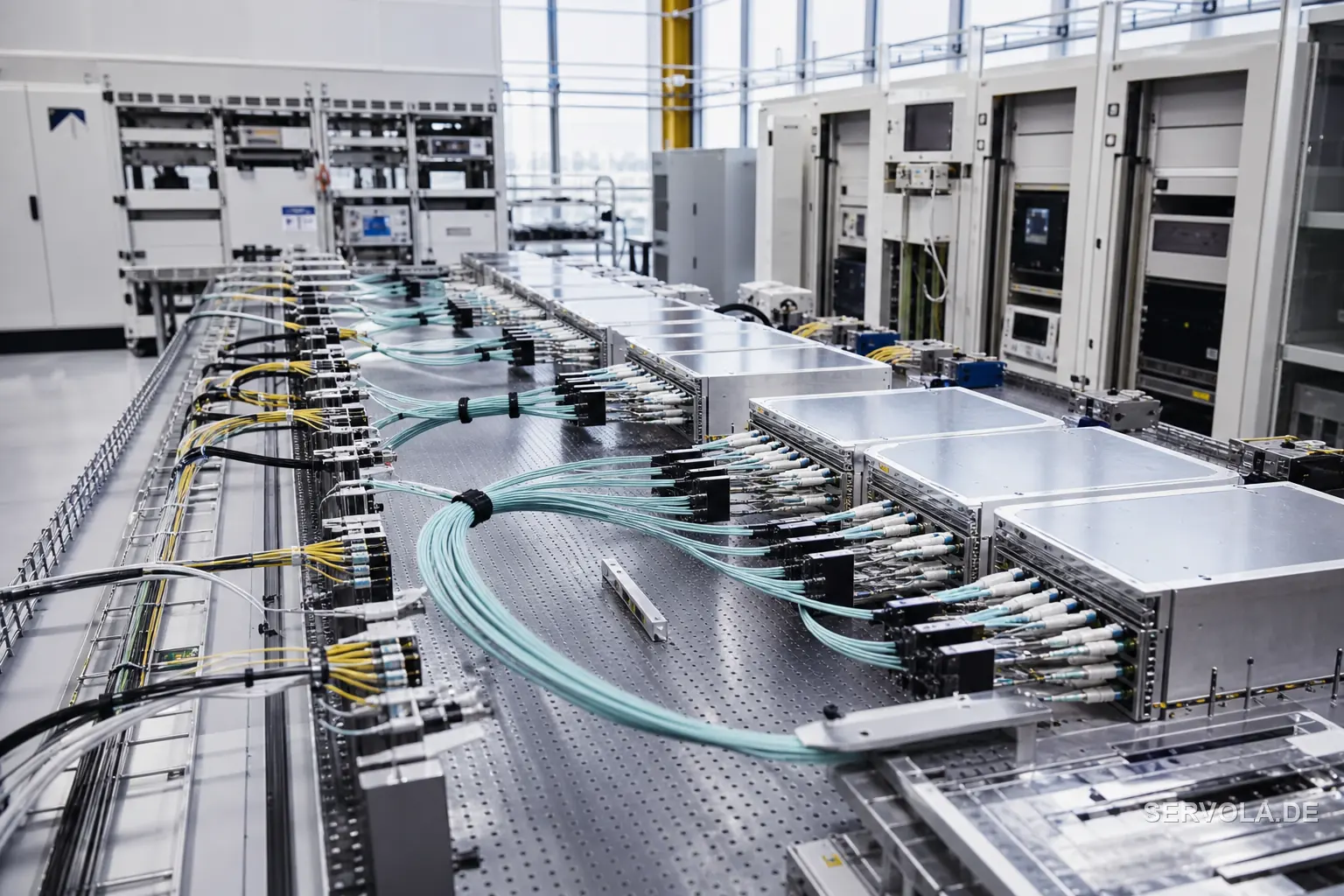
Jane Street has a reputation as one of the most rigorous, technically demanding trading firms in the world, and it does not invest on faith. Around July 2026, Etched shipped its first production rack of Sohu hardware to Jane Street, and Jane Street put it to work on real, trading-adjacent workloads, not a lab benchmark.
Only after seeing the hardware perform in live production did Jane Street lead the new round itself. That makes this Etched's first confirmed real deployment with a named enterprise customer, something different from investor due diligence or a demo run by the vendor.
What Sohu Actually Is, and What Etched Claims It Does
Sohu is an ASIC, a chip built for a single purpose, made exclusively to run transformer-architecture models, the architecture behind nearly all of today's large language models. Instead of programmable GPU cores like Nvidia's, it uses fixed-function circuits and is manufactured on TSMC's N4P process.
Etched itself claims a Sohu server can replace up to 160 Nvidia H100 GPUs, that each chip is roughly 20 times faster, and that an eight-chip server delivers more than 500,000 tokens per second on Llama-3 70B, but no independent benchmarking body has yet measured Sohu hardware under production conditions, so these remain the company's own figures.
The Tradeoff Owners Should Actually Weigh
A chip that only runs one model architecture is a real lock-in risk: if transformer architecture is ever superseded, the hardware advantage disappears with it, while a general-purpose GPU can adapt to whatever comes next. This is the same tradeoff behind the EU's push for its own Chips Act, since European AI data centers still depend heavily on imported Nvidia GPUs.
The signal worth watching over the next round or two is not Etched's own numbers, it's whether more named, technically credible customers repeat Jane Street's pattern of running the hardware in production first and endorsing it second.
Read next: One Contract Tripled Crusoe's Price in Ten Months | Europe's Pension Funds May Buy a Circular AI Bet