What America Just Bought
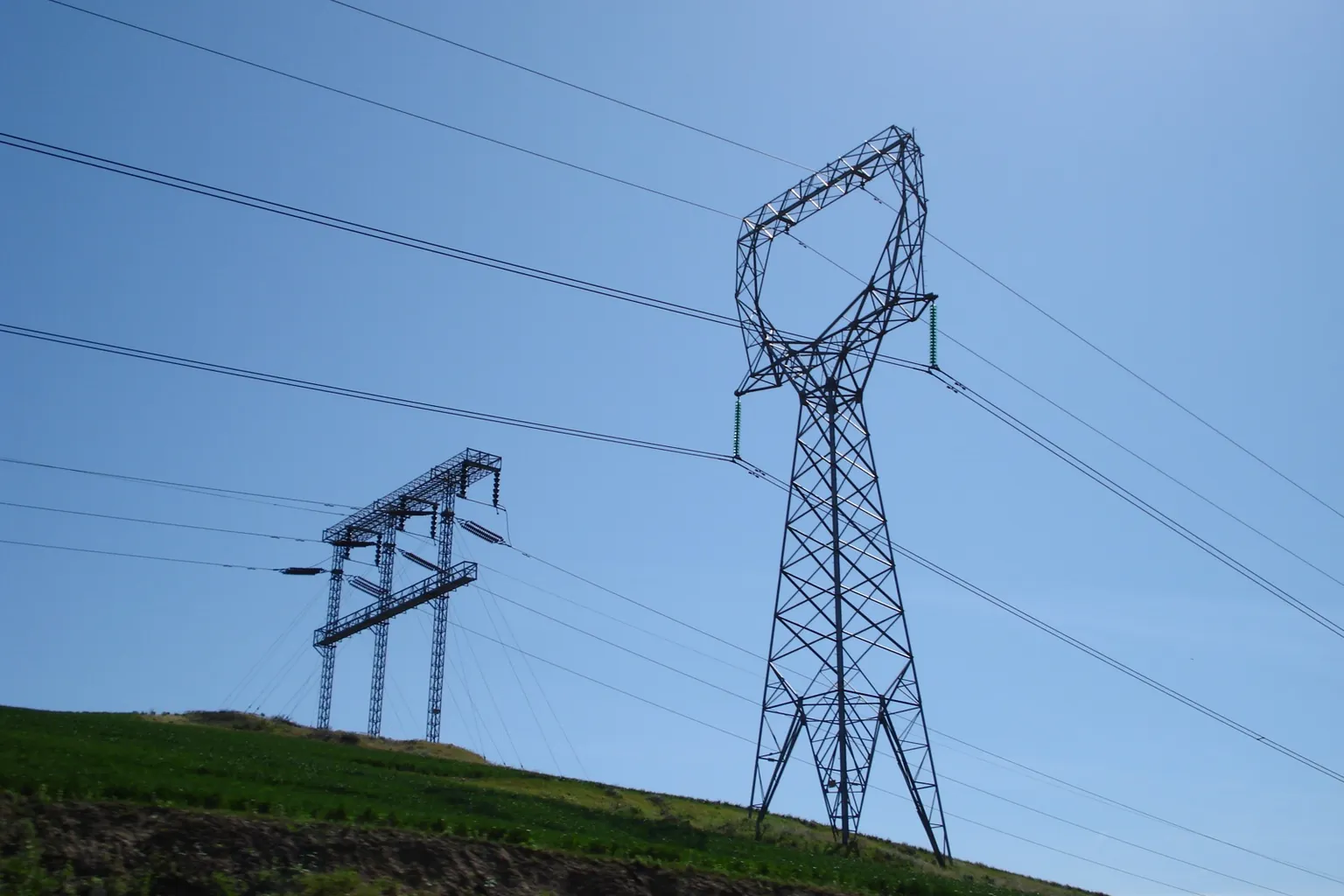
On September 24, the US Department of Energy told 31 grid projects across 26 states they had won a combined 5.25 billion dollars, 1.9 billion of it straight from the federal government and the rest matched by the recipients themselves. The program has a name built for a press release, SPARK, Speed to Power through Accelerated Reconductoring and other Key Advanced Transmission Technology Upgrades, and a plain description underneath it: pay utilities to pull thicker, smarter wire through towers that are already standing, instead of waiting years to build new ones.
The Department says the projects will reconductor or rebuild more than 1500 miles of transmission line and deploy grid-enhancing technology across nearly 21000 miles, unlocking more than 23 gigawatts of capacity for an estimated 100 million Americans. Energy Secretary Chris Wright framed it as a fix for infrastructure already in the ground: "These investments will get more out of the infrastructure we already have, move more electricity across the grid, and help deliver affordable, reliable, and secure power." Assistant Secretary Catherine Jereza put the target plainly: "DOE is moving with urgency to strengthen our grid, lower costs, and ensure America has the energy infrastructure needed."
What Britain Just Cut
Four days earlier, Britain's National Energy System Operator finished a very different kind of intervention. NESO did not fund a single mile of wire. It rewrote the rules for who is allowed to sit in the queue for a grid connection in the first place, then applied them: 1500 applications reviewed in five months, backed by more than 60 industry workgroups, culling a backlog NESO itself describes as four times larger than Britain will need by 2030, with some projects that had been waiting up to 10 years for an answer.
What survived the cull is sorted into two windows, connections due by 2030 and connections due by 2035, and NESO says the criteria now favor "shovel-ready projects and future needs like solar farms, data centres, and EV superhubs" over speculative schemes that were never going to be built. That is genuinely useful for a data centre operator to know sooner rather than later. It is not, on its own, a single extra megawatt on the wires.
A Queue Is Not A Grid
Put the two next to Europe's own read of the same problem and the difference sharpens. ENTSO-E, the body that coordinates the continent's transmission operators, puts the bill for the cross-border, hybrid and offshore grid Europe actually needs at 800 billion euros by 2050, more than 100000 additional kilometers of line, funded the way European grids are usually funded: recovered from network charges over decades, not handed over as a single act of federal cash the way SPARK was.
The SPARK money buys electrons, on a timeline of months, by squeezing more capacity out of towers that already exist. The NESO reform buys a faster, honest answer about which projects were ever going to happen. So far, only the American program has paid for its result in cash rather than in patience.
| Move | What changed | What did not change |
|---|---|---|
| US DOE SPARK | 5.25 billion dollars committed to 31 projects, over 23 GW unlocked | Projects still take months to build; not every US state got a project |
| UK NESO reform | Backlog cut from a queue 4 times 2030 demand to a two-phase pipeline | No new wires funded; capacity still has to be physically built |
| EU ENTSO-E ask | 800 billion euros and 100000+ km identified as needed by 2050 | No dedicated federal-style fund exists yet to pay for it |
The Question Before You Sign
An owner sitting on a grid connection offer, in Britain or anywhere else in Europe, now has a cleaner question to ask than when do I connect. Ask instead: does this offer come with new physical capacity behind it, funded and under construction, or does it just move you up a list for capacity that still has to be built by someone, paid for by someone, on a schedule nobody has committed to yet. NESO's reform answers the first half of that question faster than it used to. It does not touch the second half at all.
The SPARK program shows a government paying cash up front to close that gap, instead of asking ratepayers to fund it over 25 years of network charges. Europe has not built an equivalent fund yet. Until it does, an 800 billion euro shortfall matters more to any operator than whatever number shows up on a connection offer.
Read next: NESO Faces a Whistleblower Probe as Risk Reports Lapse | Wednesday's Eclipse Will Test Europe's Battery Bet