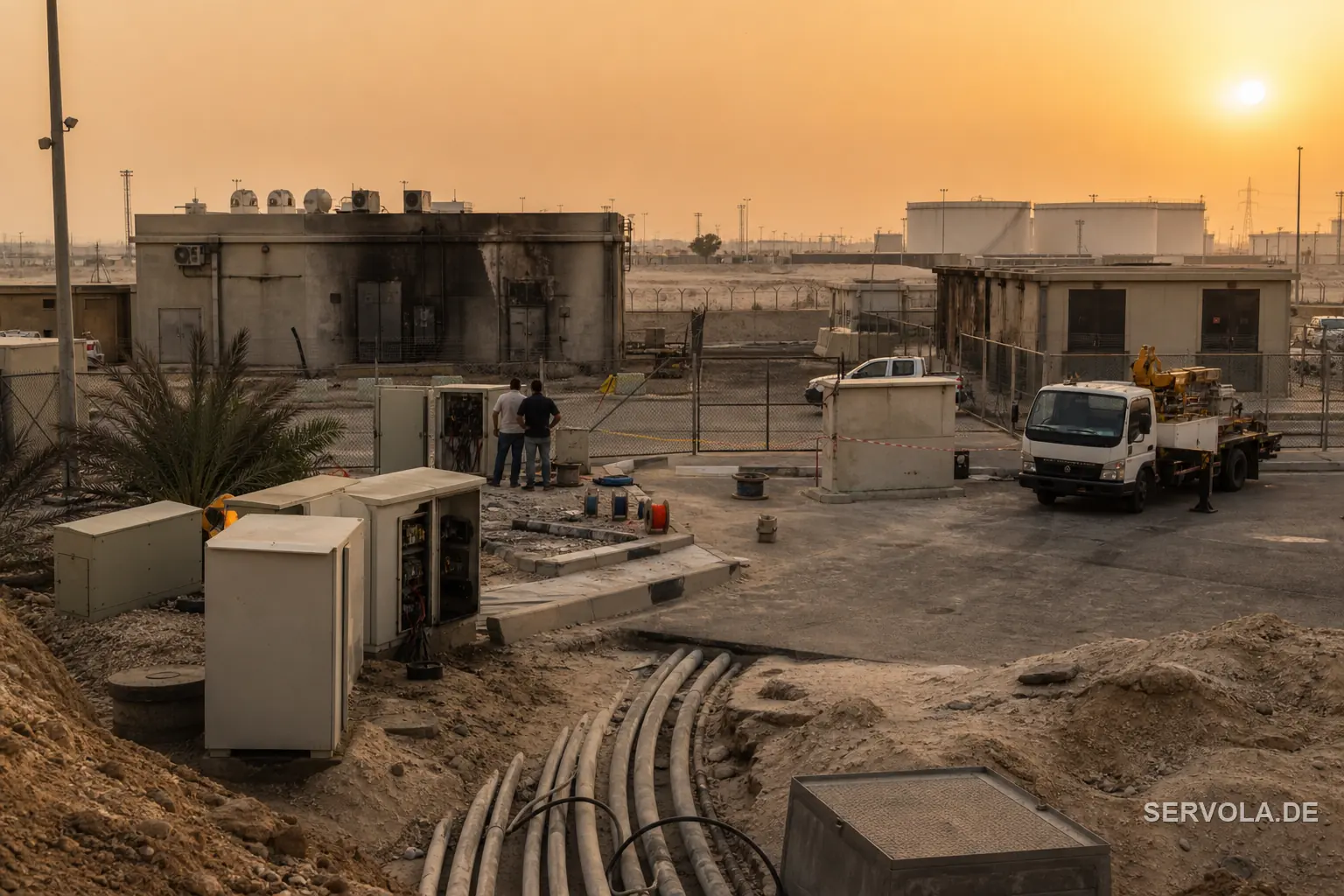
AWS Just Told Customers Some Data Is Gone for Good
Amazon Web Services confirmed on September 15 that it cannot restore access to data hosted in its Bahrain infrastructure or in one of its three United Arab Emirates availability zones, after Iranian drone strikes damaged its ME-CENTRAL-1 Middle East region in the spring. In its own words, on its Health Dashboard status page, AWS said it had determined it was unable to restore access to the resources and data hosted exclusively in the affected zones.
All three of Bahrain's availability zones were damaged. In the UAE, one specific zone, known as mec1-az2, is the one AWS has confirmed as unrecoverable, with two other zones affected but not lost outright.
The Strikes Happened in Spring, the Confirmation Came in September
Iranian drone strikes hit the Bahrain and UAE facilities in a wave across March and April 2026. Iran's Islamic Revolutionary Guard Corps claimed responsibility, saying it targeted the Bahrain site because of Amazon's support for the US military. AWS spent the following months trying to bring the affected zones back online before concluding, six months later, that some of the damage was permanent.
AWS gave a direct account of why: the damage spanned multiple availability zones at once and, in the company's own words, exceeded what its regional and multi-availability-zone services are designed to withstand. That is an admission that a scenario its architecture assumed would never happen, all zones in a region being hit together, is exactly what happened.
Bahrain and the UAE Are Not in the Same Position
| Bahrain | UAE | |
|---|---|---|
| Zones affected | All three availability zones | One zone confirmed unrecoverable, two others affected |
| Data status | AWS says it cannot restore access | Confirmed loss limited to zone mec1-az2 |
| Next update | Early 2027 | No firm date, described as coming months |
| Responsibility claimed | Iran's Revolutionary Guard Corps | Same wave of strikes |
Bahrain is the worse case by every measure AWS has published. It lost all three zones at once, which is the exact failure mode multi-availability-zone design exists to prevent.
This Looks Like the First Time a Weapon Beat Cloud Redundancy
Multi-availability-zone architecture is the standard answer cloud providers give when asked how they survive a disaster: spread a customer's workload across physically separate facilities in the same region, so that losing one does not lose the data. AWS is now on record saying that assumption failed against a coordinated military strike on a single region, not because the design was flawed, but because the attack exceeded the scale the design was built for.
Reporting since the March and April strikes has already called this the first confirmed military attack on a hyperscale cloud provider's infrastructure. The September confirmation adds the harder fact: military damage to a cloud region can produce data loss that no amount of waiting or engineering effort reverses.
What This Means If Your Disaster Recovery Plan Assumes the Cloud Never Loses Data
Banking operations were among the customers affected, and AWS says it helped some migrate workloads to other regions using their own backups where those existed. That last clause matters: AWS's own multi-zone redundancy inside the region was not enough on its own. Customers who had also kept independent backups outside the region were the ones who recovered.
For European firms with any Gulf-facing operations, or any business anywhere that leans on a single cloud region for disaster recovery, the lesson is not about AWS specifically. Under the EU's Digital Operational Resilience Act, financial firms already have to document exactly this kind of scenario as a third-party concentration risk. This is the live case study: a region that met every design standard still lost customer data to a physical attack, and the businesses that survived it were the ones that had not put all their resilience in one provider's hands.
Why We Do This
We do this for everyone trying to keep up with what technology is doing to our lives. The people who build it, and the people it happens to. The Servola Journal exists so that what we learn belongs to all of them.
Nobody pays us for this. No ads, no paywall, free to everyone. We just believe that understanding what's happening to all of us shouldn't depend on who can afford to pay for it.
If it gave you something today, tell us to keep going. Follow us, leave a like, or write a positive comment. We read every one, and they are what keeps us going.
Read next: 50 Billion Dollars In Data Centers Is Splitting America's Unions | AWS's Anti-Nvidia Chip Adopts Nvidia's Memory