A list that named companies now names places
On 27 July an interagency body convened by the White House sent the Federal Communications Commission two national security determinations. The next day the Commission's Public Safety and Homeland Security Bureau released public notice DA 26-786, and the Covered List, which had not changed since 18 March, gained two new lines: foreign-produced power inverters, and foreign-produced advanced robotic devices.
Every entry added to that list since March 2021 has named a company. Huawei and ZTE went on in March 2021, alongside Hytera, Hikvision and Dahua for surveillance equipment. Kaspersky followed in March 2022, then China Mobile International. A vendor could read the list, confirm its own name was absent, and carry on. The Bureau spelled out what changed in a single clause: this newly-covered equipment is identified by place of production, not by entity.
The practical reading is blunt. The determination on inverters covers those produced in a foreign country, regardless of the nationality of the producer. From a United States vantage point, a factory in Bavaria, Valencia or Lodz is a foreign country in exactly the way a factory in Anhui is. The robotics determination is broader still and covers all foreign-produced advanced robotic devices, meaning mobile machines such as humanoids and quadrupeds.
What the two determinations actually say
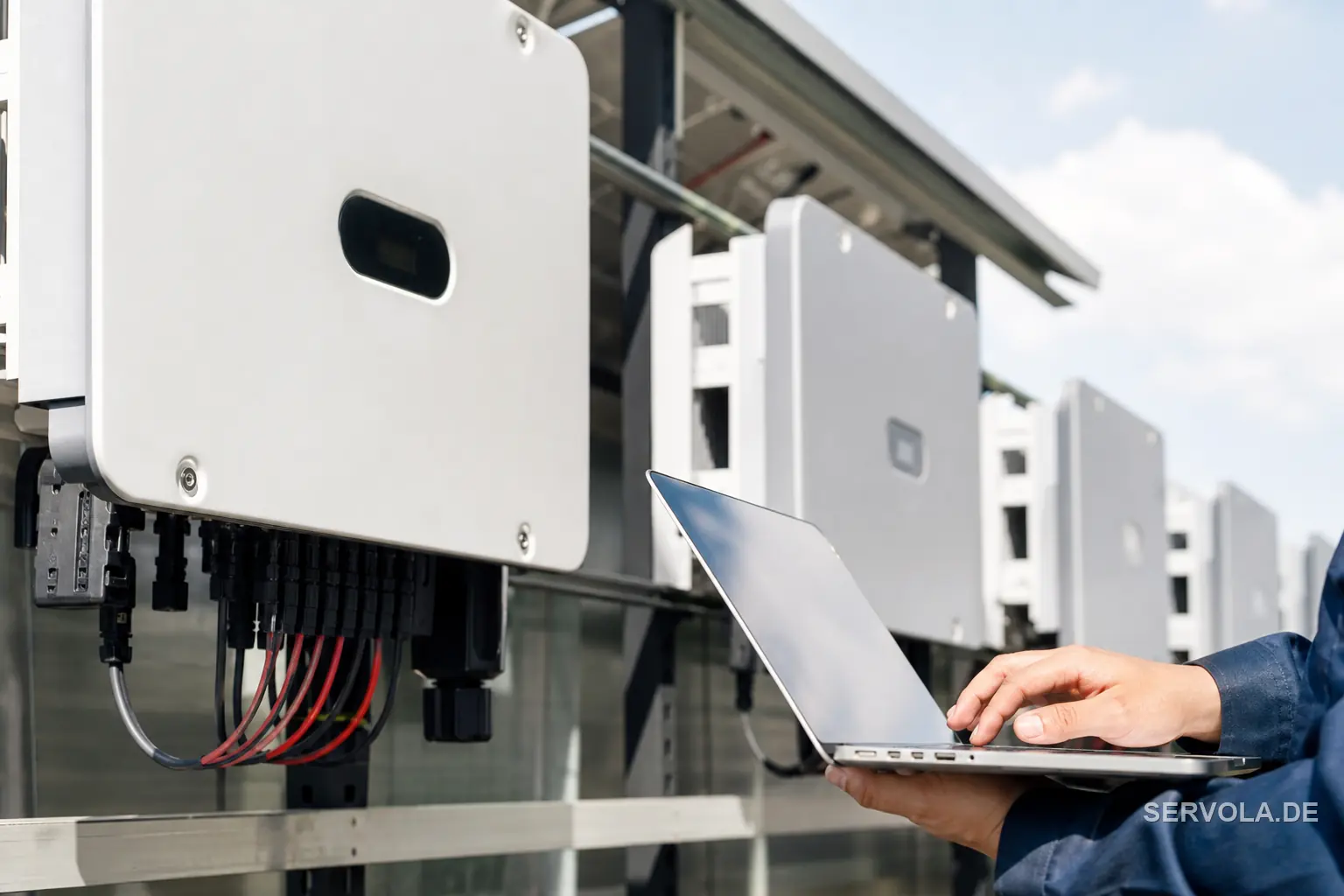
The inverter finding is a grid-control argument, not a trade argument. The determination states that inverters' remote connectivity introduces additional vulnerabilities which compound as inverter-based resources proliferate on the U.S. grid, and that those vulnerabilities could enable foreign firms to turn off the inverters or use them to collect and exfiltrate data. The interagency body concluded that foreign-produced inverters create both a supply chain vulnerability affecting economic security and a cybersecurity risk to critical infrastructure.
The robotics finding rests on data collection and remote control. Advanced robotic devices, it states, collect data that could be leveraged by malign actors to surveil Americans, enhance the capabilities of foreign intelligence services, or to remotely commandeer the robots. Neither document turns on who owns the manufacturer. Both turn on the machine being networked, updatable and built somewhere else.
The exemption runs through the Department of War
Nothing here is enforced at a port. It is enforced at the authorization stage, which is earlier and harder to route around. Under section 2.903(a) of the Commission's rules, equipment on the Covered List is prohibited from receiving an equipment authorization, and under section 2.911 every application must certify that the equipment is not covered. Without that authorization a device cannot be imported, marketed or sold in the United States. Models already authorized and already in the field are not withdrawn.
The interagency body did build an exit. Entities producing inverters or advanced robotic devices in a foreign country can request an evaluation and receive a Conditional Approval that exempts the device. For inverters, the Department of War or the Department of Homeland Security may carry out that evaluation. For advanced robotic devices, only the Department of War may. Applicants have to supply whatever the relevant guidance document asks for.
Read that as a roadmap item rather than a legal footnote. A European manufacturer that wants to keep selling new inverter models into the United States now has a US defence ministry sitting between its product schedule and its largest export market, on a review timetable it does not control. The cost of that review is not the filing fee. It is the quarters that a launch slips while it is pending.
Brussels reached the same worry by the opposite route
Europe moved first on this risk and drew the line somewhere else entirely. On 4 May the European Commission set out that it would gradually eliminate Chinese-made inverters from EU-funded energy projects, working through project-level policy checks and provisions of the EU financial regulation rather than new legislation. An EU official summarised the finding as serious economic and cybersecurity risks, with the worst case being interference in European energy infrastructure severe enough to trigger blackouts.
The mechanism is a funding condition, not a prohibition. Chinese inverters remain legal in projects that take no EU money. The transitional phase begins on 1 November, with full application to new contracts from April 2027, and manufacturers in Japan, South Korea, Switzerland and the United States remain eligible throughout. Lithuania went further and earlier, barring Chinese manufacturers from remote software access to the country's solar, wind and battery storage assets since 1 May 2025.
The gap between the two approaches is the whole story. Brussels asks who the supplier is, so a European factory is the answer to the question. Washington now asks where the box was made, so a European factory is the problem. Chinese manufacturers hold roughly 80 percent of the global inverter market, and both capitals are aiming at that number, but only one of them is doing it in a way that a European producer can satisfy by being European.
Two questions where there used to be one
Procurement teams have spent two years learning to ask one question about grid-connected hardware: who made it. That question still answers the European test and it no longer answers the American one. If your organisation buys inverters, battery inverters or mobile robots, the record you need against each asset is now the country of manufacture as well as the vendor, and the two can differ for the same product line.
If your organisation sells any of this into the United States, the work is different and it is dated. New models need either US production or a Conditional Approval before an authorization application will pass certification, and the queue for those approvals starts now rather than when the first rejection arrives. Existing authorized models keep selling, which buys time and hides the deadline.
Read next: One Suspect, 4,200 Megawatts, Germany's Grid Gap | Google Takes Android's DMA Orders to the EU Court