The Finding: Storage Is Cheaper In Every Market Modelled
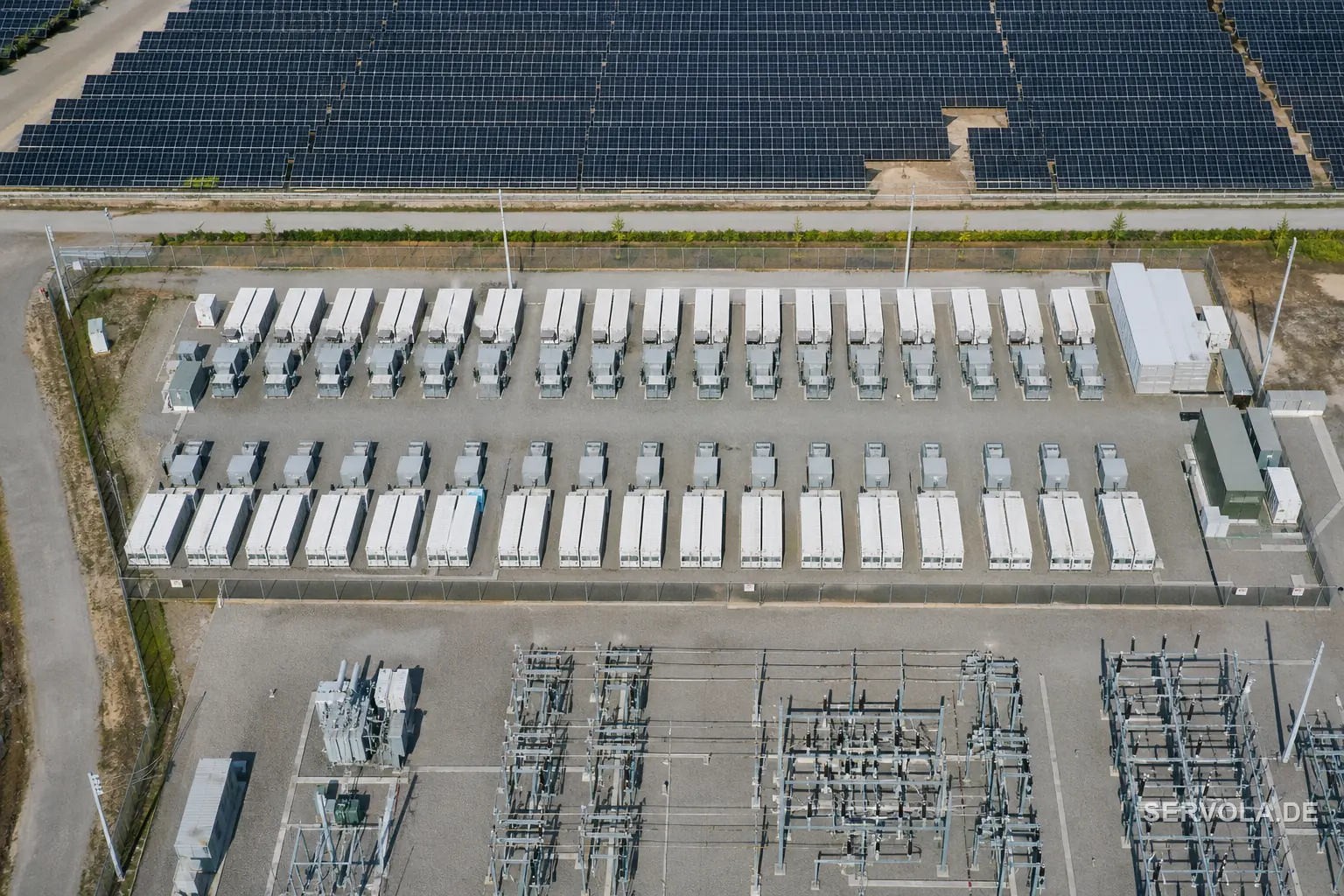
Wood Mackenzie's latest global LCOE report, published on 8 October, finds four-hour battery storage less expensive than open-cycle gas turbines in all 43 markets where it modelled both. LCOE is the levelised cost of electricity, a modelled average cost per unit and not a quote for any one project. The comparison is for peaking duty, the plants that cover demand peaks.
The same report finds single-axis tracker solar the lowest-cost new-build technology in 43 of 48 modelled markets, with onshore wind leading in the other five. Principal analyst Ahmed Jameel Abdullah called the shift decisive and widening, citing gas turbine shortages and rising fuel volatility against expanding battery manufacturing.
Why The Turbine Is The Scarce Part
The cost gap has a supply side. TechCrunch reports that AI data centre developers have been buying up gas turbines, which has pushed up prices for all new natural gas plants.
Open-cycle turbines are simpler to make than closed-cycle ones but still take two to four years to procure, and waitlists for closed-cycle turbines extend into the early 2030s, TechCrunch says. Wood Mackenzie's North America section adds that data centre load growth is driving a gas capacity supply deficit through the late 2030s, which keeps thermal capital costs high.
The Figures By Region
Wood Mackenzie's regional numbers show an uneven picture, and North America stands apart because tariffs and import restrictions lift its near-term costs.
| Region | Wood Mackenzie's figures |
|---|---|
| Middle East and Africa | Four-hour storage at US$120/MWh in 2026, falling 33 percent to US$80/MWh by 2035. Solar at US$37/MWh |
| Asia Pacific | China's storage benchmark is more than 55 percent below the rest-of-region average of US$134/MWh, which is expected to fall to US$92/MWh by 2036 |
| Latin America | Storage cost forecast to fall 42 percent by 2060 |
| North America | Near-term costs lifted by tariffs and import restrictions. 168 GW of utility-scale solar is safe-harboured. Module prices expected to rise about 5 percent a year through 2030 |
All figures are Wood Mackenzie's, in US dollars. Europe has its own section below.
Europe Has The Highest Fossil Generation Costs
Europe has the highest fossil-fuel generation costs of any region Wood Mackenzie modelled, and it projects levelised carbon costs to pass fuel costs by 2030. Solar PV remains the cheapest power technology in Europe even after a 14 percent rise in capex in 2026 on higher module costs.
Storage is not immune to cost pressure. Turnkey battery capex in Europe rose about 2 percent, the first increase in three years, as cell prices rebounded about 10 percent from their 2025 low. Wood Mackenzie forecasts capex to fall 12 percent by 2031, with the pace slowing as lithium prices roughly double in 2029.
How A Site Planner Should Read The Gap
A turbine reservation is an option that delivers power between 2028 and 2030 at the earliest, if the two-to-four-year procurement time holds. Put a delivery date for storage and solar next to it before you decide, and ask the storage supplier for firm dates rather than assuming they are shorter.
Check the grid connection rules and how storage is paid or bid in your market, because a lower modelled cost only counts if the site can earn from it. In the EU, carbon price exposure also weighs against fossil peaking, which is where Wood Mackenzie's carbon-versus-fuel projection points.
Treat Wood Mackenzie's figures as a screening comparison and not as a project quote. Your own costs will depend on site, financing, duty cycle and the date you sign.
Read next: Ofgem's GBP 712,500-Per-MW Grid Bond Lands This Month | Finland Halts Google Work At Two Data Centre Sites