Two Competitors, One Power Grid, Ten Minutes Apart
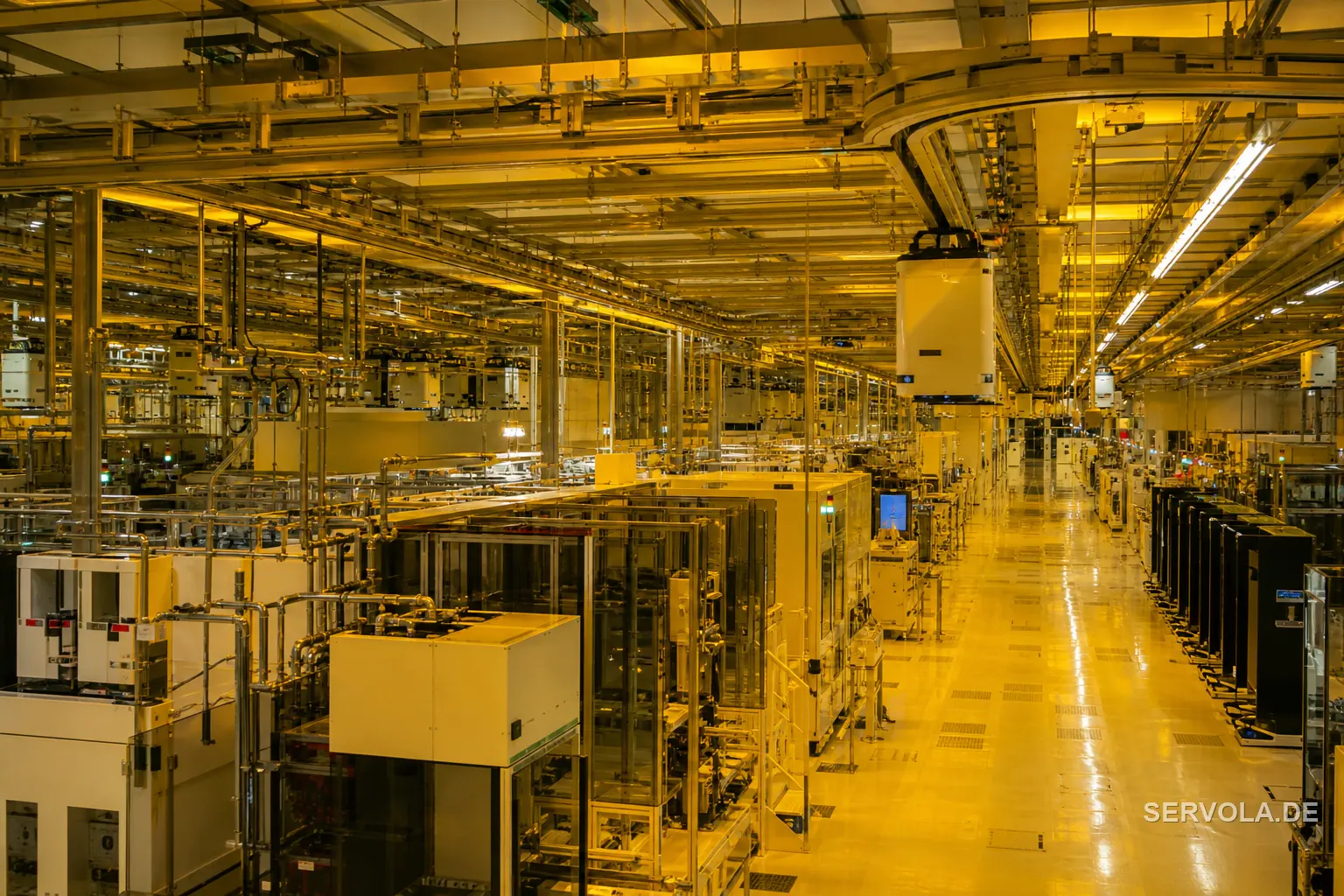
Samsung and SK Hynix are each building a separate memory and foundry cluster in Yongin, a city in Gyeonggi Province south of Seoul, roughly 10 minutes apart by car within the same Cheoin-gu district. SK Hynix's own board approved 21.6 trillion won of new facility investment for its cluster on February 25, 2026, part of a build-out TrendForce reported had already grown to 600 trillion won by November 17, 2025, up from an original 128 trillion won plan when the project was first approved in 2019. Samsung has separately committed 450 trillion won over five years to its own cluster in the same district.
Two direct competitors concentrating the bulk of the world's advanced memory manufacturing inside a single Korean district was already a supply-chain concentration story. What has not been priced into that story is that both companies are drawing on the same regional power grid and the same regional water system to do it, at a scale neither system was built for.
The Power Roadmap Moved Up 11 Years -- and Still Runs to 2041
According to a Korea Herald report published August 12, 2026, Climate, Energy and Environment Minister Kim Sung-hwan said the government, utilities, and local authorities would work to drastically shorten the administrative procedures needed to deliver power to the Yongin and Honam chip complexes, after moving the target completion date for the Yongin Semiconductor Mega Cluster's full power supply up from 2053 to 2042. The complex's total power need is put at over 14 gigawatts by 2041, according to Korea Electric Power Corporation's roadmap: near-term power comes from existing transmission lines and three new 1-gigawatt LNG plants, with additional transmission capacity planned for 2031 and 2032.
Eleven years faster is still 2041 to 2042 -- roughly 15 years after the first Yongin cleanrooms are due to open. A separate Korea JoongAng Daily report from the same day quotes Kwon Seok-joon, a chemical engineering professor, making the underlying point directly: semiconductors are a timing-driven industry, and in Korea a fab can be built in three years while a 345-kilovolt transmission line takes an average of 13 years to complete, compared with two to three years in China.
The Water Problem Has an Even Thinner Margin
Power is not the only utility running behind. Korea JoongAng Daily reporting from June 30, 2026 put the Yongin cluster's daily industrial water need at 646,000 to 800,000 tons once four planned fabs are running, each needing roughly 200,000 tons a day, against 400,000 to 500,000 tons the government can currently secure from dams. State utility K-water's president said at the time that combining what can be secured from dams with a further 300,000-plus tons of reallocated river water would close the gap -- a plan with essentially no spare margin if any single component underperforms. Samsung's semiconductor division head, Jun Young-hyun, has publicly called for swift, one-stop administrative support and state-led infrastructure, language that reads less like routine lobbying and more like a company naming its own bottleneck.
Both the power and water numbers keep moving in the same direction: up, and later than originally planned. The government's own fast-tracking of construction has cut 7 years off Samsung's build timeline and 12 years off SK Hynix's, according to reporting on the ministerial announcement, which only widens the gap between how quickly the cleanrooms can open and how slowly the utilities feeding them can be finished.
What This Means for Anyone Buying HBM or DRAM
None of this means the Yongin cleanrooms will not open on schedule; Korea's construction fast-track is real and well-documented. What it means is that a fab opening on time is not the same claim as a fab running at full, uninterrupted rate, when the power behind it is bridging on LNG plants and short-term transmission additions for another 13 to 15 years, and the water behind it depends on a reallocation plan with no acknowledged buffer. European and UK buyers negotiating multi-year HBM and DRAM volume commitments tied to this specific capacity are already pricing memory-price risk and supply-timeline risk into those contracts; what is not typically priced in is curtailment risk during the long interim period between a cleanroom's ribbon-cutting and its region's grid finishing the job.
The practical takeaway is not to distrust the 2027 to 2029 production dates themselves, but to ask suppliers a different question than the one most volume contracts already answer: not just how much capacity will exist, but what happens to that capacity's actual output on the days the regional grid or water allocation comes up short, in a decade where, by the government's own roadmap, that grid and water system will still be under construction.
Read next: SK Hynix's US HBM Plant Still Needs Korean Wafers | Memory Got This Expensive For Two Separate Reasons