The Burden of Proof Has Quietly Flipped
For a century a photograph, a recording, or a signed document was treated as close to self-proving. Deepfakes end that assumption. When a convincing fake costs minutes to produce, a court, a counterparty, or an insurer can no longer assume that a genuine record is genuine, and the person holding the truth now carries the burden of establishing it.
Researchers named this the liar's dividend: the more fakes circulate, the easier it becomes to wave away authentic evidence as one more fabrication. The technology cuts both ways. Fabricated records are presented as real, and real records are denied as fabricated, and both moves now succeed often enough to matter in a dispute.
Courts Are Already Sorting Real From Fake
This is no longer theoretical. In Mendones v. Cushman and Wakefield a California judge reviewed video of a witness, identified it as AI-generated audio and video of a real person, dismissed the case with prejudice, and imposed terminating sanctions on the party that filed it. Judges across jurisdictions report parties invoking the mere possibility of AI to cast doubt on authentic exhibits.
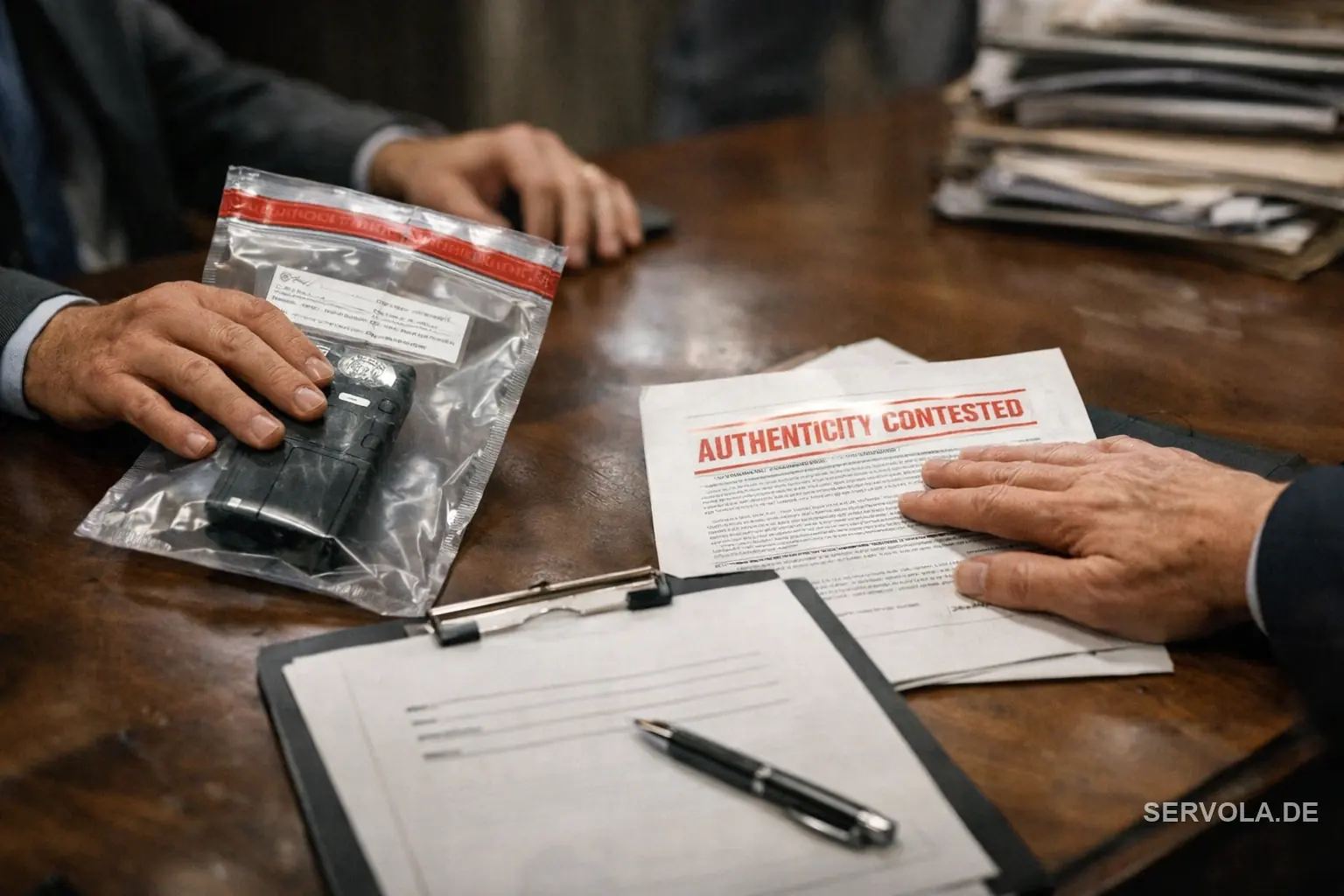
In response the rules are hardening. A proposed United States Federal Rule of Evidence 707 would subject machine-generated evidence to the same reliability scrutiny as expert testimony, and German courts are testing how far a screenshot or a recording can be trusted without independent proof of origin. The direction is consistent: a record is worth what its provenance can show, not what it appears to be.
Make Your Records Provable Before You Need Them
The defense is not better detection software, which always lags the fakes. It is provenance by design. Capture content credentials, cryptographic signatures, and a tamper-evident chain of custody at the moment a record is created and stored, and keep a documented retention trail, so the authenticity of a board minute, a contract, a call recording, or a security feed can be demonstrated rather than asserted.
Owners and family offices hold exactly the records that disputes turn on, often for decades. The time to make them provable is when they are created, not when an opponent in litigation or a diligence team in a deal first claims they could be fake. By then the leverage has already moved.
Read next: Germany Banned This Ad. Today, So Does the EU. | Alabama's TikTok Settlement Is Now a Product Spec