The stakeholder process settled this in June, and the board reopened it
On 30 June, PJM stakeholders backed a plan to procure new capacity for data centres and rejected the option to curtail them during shortages. Four weeks later the PJM Board of Managers issued a decisional letter, dated 27 July, directing the grid operator to file both measures with the Federal Energy Regulatory Commission: a Reliability Backstop Procurement and an Interim Resource Adequacy Service that curtails large loads.
One CIFP proposal carried supermajority stakeholder support and the board judged it insufficient. That sequence is the part worth filing away. Anyone who treats a stakeholder vote as an early-warning signal for grid policy just watched one produce a confident false negative, four weeks before the opposite landed at FERC.
The numbers behind the reversal are not subtle. PJM forecasts roughly 70 gigawatts of new large load by 2038 against about 15 gigawatts of generation retired since 2022, across a footprint serving 67 million customers. Joseph Bowring of Monitoring Analytics puts the cost data centre loads added at 29.4 billion dollars over the last four auctions. A board looking at that arithmetic was never going to leave curtailment on the cutting-room floor for long.
The threshold aggregates, so a campus is one load
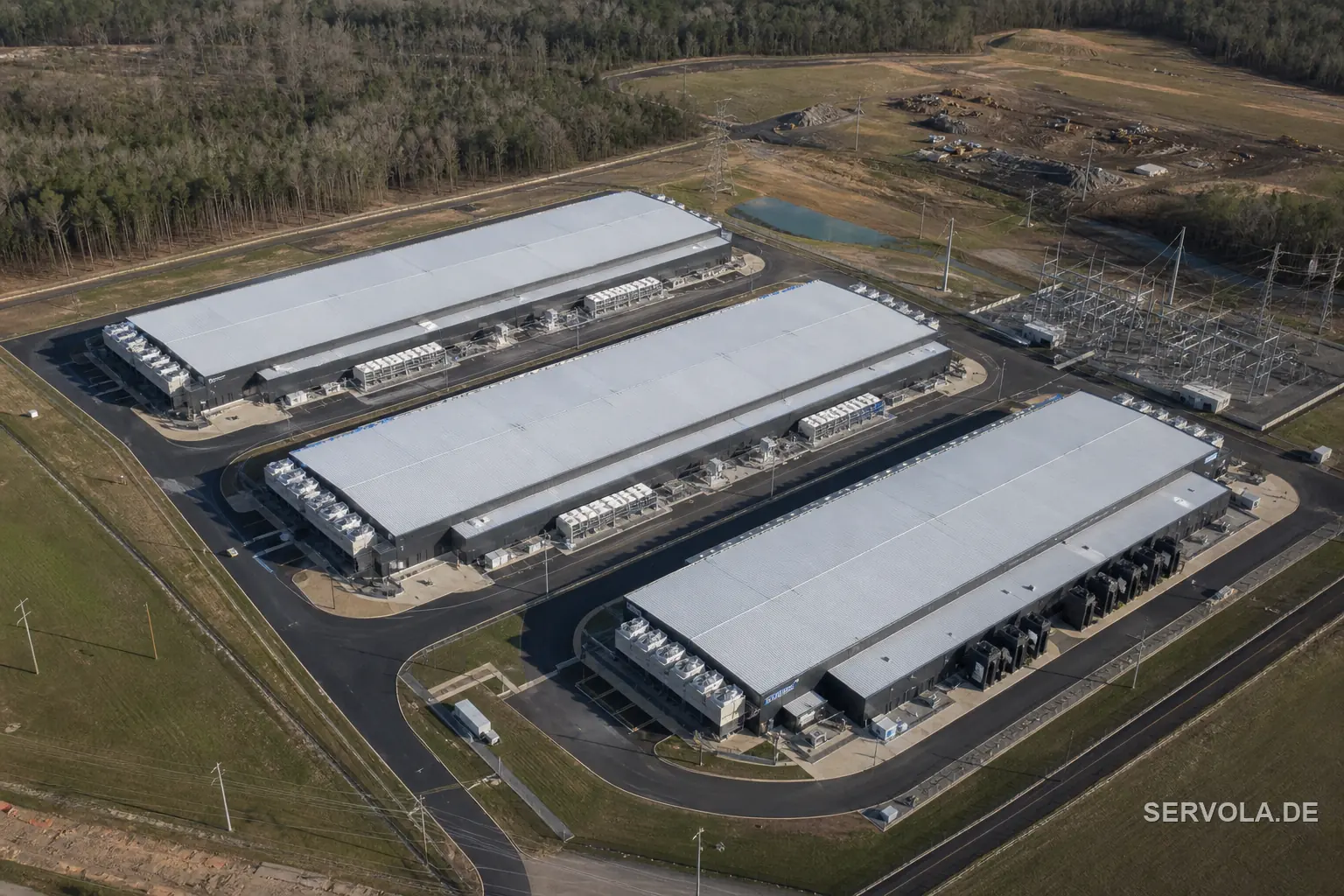
A Large Load is defined as an end-use customer with a peak load of 50 megawatts or more at a single point of interconnection, or at multiple points of interconnection within a one-mile radius. The one-mile clause is the whole design. It closes the obvious avoidance route, which is to build the same campus as several separately metered halls and keep each one under the line.
Three 20 megawatt halls inside a mile are one 60 megawatt Large Load. So are a 35 megawatt build and its 20 megawatt phase two, once the second phase energises. A site plan drawn to keep each connection modest does not produce three small customers; it produces one registered large one, and the registration is mandatory.
The registry itself is worth reading as a disclosure obligation rather than a form. It records each site's location, its power ramp, its backup generation and fuel type, its qualifying capacity, and any allocation it holds from the backstop procurement. Loads already operating before 1 June 2027 have to register by 1 March 2027. An operator that has never had to state its ramp curve to a regulator will be stating it, and that number is harder to revise later than it is to set now.
A second auction at the price the first one was not allowed to pay
The base capacity auction for 2028/2029 cleared on 14 July at 325 dollars per megawatt-day, which is exactly the FERC-approved ceiling, and it finished 6,831 megawatts short. PJM published at the time that without the price collar the auction would have cleared near 555 dollars across the footprint.
The backstop procurement the board has now directed seeks 6,831 megawatts at a maximum willingness to pay of 555 dollars per megawatt-day in unforced capacity terms. Both numbers are the auction's own output. The capped market did not fail to discover a price; it discovered one and was not permitted to pay it, and the board has now built a second venue where it can. Bilateral matching runs in August, the central bid window opens 30 September and closes 21 October, evaluation runs to 2 December, and commitments can extend to fifteen years.
Reading it as a rescue misses what it concedes. A cap that binds is a rationing rule rather than a price, and the correct response to a binding cap is either to move the cap or to build a channel around it. PJM has chosen the channel, kept the collar in the base auction, and allocated the backstop cost to load-serving entities on the same methodology. Everyone on the system pays for the resource; only the new large loads carry the interruption.
The resource that covers 2028 is the curtailment
Here is the arithmetic nobody has put together. The shortfall being solved sits in the 2028/2029 delivery year. The resources procured to solve it are not required to be in service until 1 June 2032. That is four delivery years between the gap and the steel that was bought to fill it.
Something has to carry 2028/29 through 2031/32, and the only instrument in the package that exists in those years is the curtailment. The Interim Resource Adequacy Service is therefore not a backstop to the backstop. It is the capacity product for the intervening period, dressed as a reliability guardrail. Large loads are also effectively removed from auction demand from the 2029/2030 delivery year, which is what Jefferies means when it says the change should lower capacity prices over time: the demand curve gets smaller because some of the demand has been reclassified as interruptible.
Julia Hoos of Aurora Energy Research described the package as an effort to plug the gap and then push responsibility for procuring new generation onto large loads. That is an accurate reading of the mechanism, and it is also the reason the 1 June 2027 date matters more than the 2032 one. Bring your own capacity by then and you are a firm load. Miss it and you are the reserve margin.
This is a contract question now, not a queue question
Europe's version of this constraint has been queue-shaped. Britain's connections reform, Dublin's moratorium, the Dutch congestion maps: the question has been whether you can get connected at all, and the answer has been a date. PJM has introduced a different question. You get connected, and then your load is conditional.
That moves the exposure out of the site-selection model and into the contract. A colocation agreement promises availability against the facility's power, and the facility's power at 50 megawatts and above is now interruptible unless capacity has been secured or an allocation obtained from the backstop. Notice periods in comparable demand-response programmes run from about thirty minutes to a few days, and curtailed customers are compensated, which means the commercial question is not whether you are exposed but what the compensation is worth against your own downtime cost.
Three things belong in the next contract you sign in any capacity market, not just this one. Ask whether your site aggregates with anything else your landlord operates within a mile. Ask who holds the qualifying capacity or the backstop allocation that keeps you out of the curtailment order, and get it named. And put your curtailment terms in hours per year with a stated notice period, because a promise of compensation without a cap on hours is not a service level.
Read next: PJM Overrules Its Own Two-Thirds Vote | CAISO Tells FERC It Has No PJM-Style Shortfall