A Deadline That Moved, But Only at the Far End
The European Commission published its proposal to revise the EU Emissions Trading System on July 17, 2026, alongside a new Electrification Action Plan. Buried in the technical detail was a change to how fast free carbon allowances disappear for the sectors covered by the Carbon Border Adjustment Mechanism, steel, cement, aluminium, fertiliser and hydrogen. Free allocation for these sectors is currently being phased out on a schedule that runs from 2026 through the early 2030s. The Commission's proposal slows that path: 15 percent of already phased-out free allocation would be reintroduced from 2028, and the full phase-out horizon is pushed out to 2038, according to the Commission's own EU Climate Action page describing the reform.
That relief is not unconditional. Member states would have to direct 50 percent of their national ETS auction revenues into decarbonizing the sectors the scheme covers, a commitment the Commission puts at more than EUR 100 billion in investment before 2030. The money is meant to flow through a new Industrial Decarbonisation Bank and an Investment Booster, on top of the existing Innovation Fund and Modernisation Fund. A separate proposal issued the same day raises the so-called fallback benchmarks for heat and fuel, unlocking roughly 80 million additional free allowances for energy-intensive industry across 2026-2030. Both proposals now enter the ordinary legislative procedure, with the Commission targeting agreement between Parliament and Council in early 2027.
Steel's Answer: The Wrong Number Moved
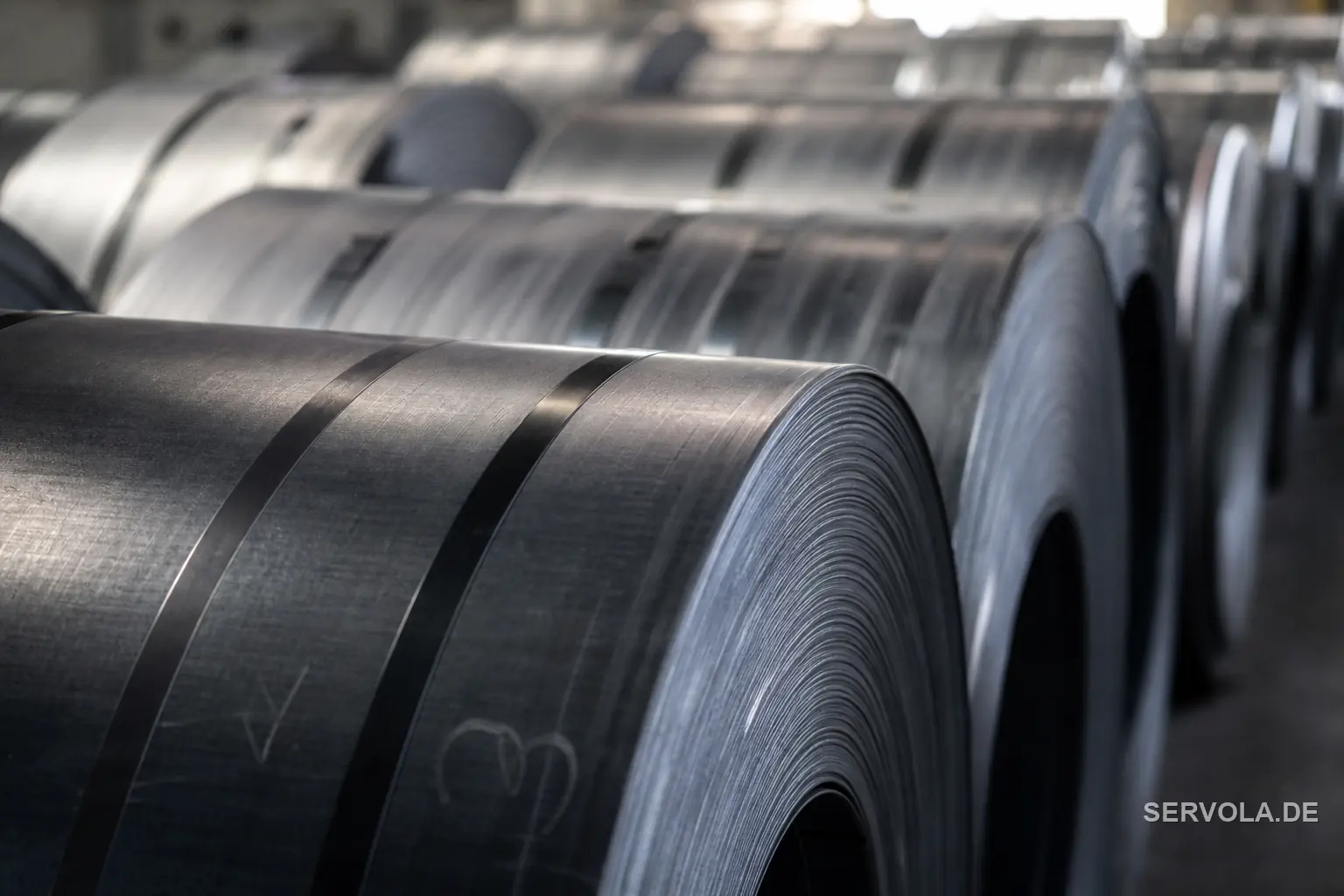
EUROFER, the European steel trade association, responded the same day the Commission published its proposal. Its statement is not a rejection. Director general Axel Eggert welcomed the revised steel benchmarks as a stronger incentive for low-carbon technology such as hydrogen-based direct reduction. But his central point cuts against the headline framing of relief: roughly 35 percent of Europe's conventional steelmaking capacity is meant to convert to hydrogen-ready plants by 2030-2032, feeding an assumption that the sector reaches close to full low-carbon production by 2033. Eggert called that assumption a fantasy without the enabling conditions in place first, meaning affordable clean electricity and hydrogen at industrial volume, neither of which exists today at the scale or price European steelmakers would need.
The detail that matters for anyone reading only the 2038 headline is what EUROFER flagged as unchanged: the free-allocation reduction scheduled around 2029-2030, the window that actually determines capital spending decisions being made now, is largely untouched by this proposal. So is a sharp cut to the main steel benchmark pencilled in for 2031, which EUROFER says threatens the carbon leakage protection the whole free-allocation system exists to provide. An EU steel industry generating EUR 215 billion in annual turnover, employing 298,000 people directly across more than 500 sites in 22 member states, is being told its long-run deadline softened while the near-term one that forces plant-level investment choices this decade did not move.
What This Means Beyond Steel
The steel-specific numbers matter to steel operators. The pattern matters to every EU industrial energy buyer watching a regulatory carbon-cost curve to size a decarbonization capex plan, chemicals, cement, glass, fertiliser, any sector inside the CBAM perimeter or adjacent to it. The Commission moved the part of the schedule that is politically visible and easy to announce as relief, the 2038 end date, while leaving the part that actually forces spending decisions, the 2029-2031 benchmark cuts, effectively where it was. That is not necessarily bad policy. It is, however, a data point: a government-set carbon-cost deadline is not a stable input you can size a ten-year capex plan against, because the part that moves under lobbying pressure is rarely the part closest to today.
The more durable constraint is not regulatory at all. It is physical: whether clean electricity and green hydrogen actually arrive at industrial volume and industrial prices on the timeline the policy assumes. EUROFER's objection is not that the deadline is unfair, it is that the grid and hydrogen infrastructure behind it does not exist yet in any member state at the scale the 2033 full-decarbonization assumption requires. An operator planning around the ETS calendar should be tracking the electricity and hydrogen supply curve, not the legislative one, because the legislative curve has already shown it will bend to accommodate a supply curve that is not ready, and it will keep doing so closest to the deadlines that are politically hardest to defend, not the ones that are furthest away.
Read next: Google Put Four AI Chips in Orbit, Not a Data Center | The Clause That Just Saved Oracle Is In Your Contract