What Von der Leyen Announced in Strasbourg
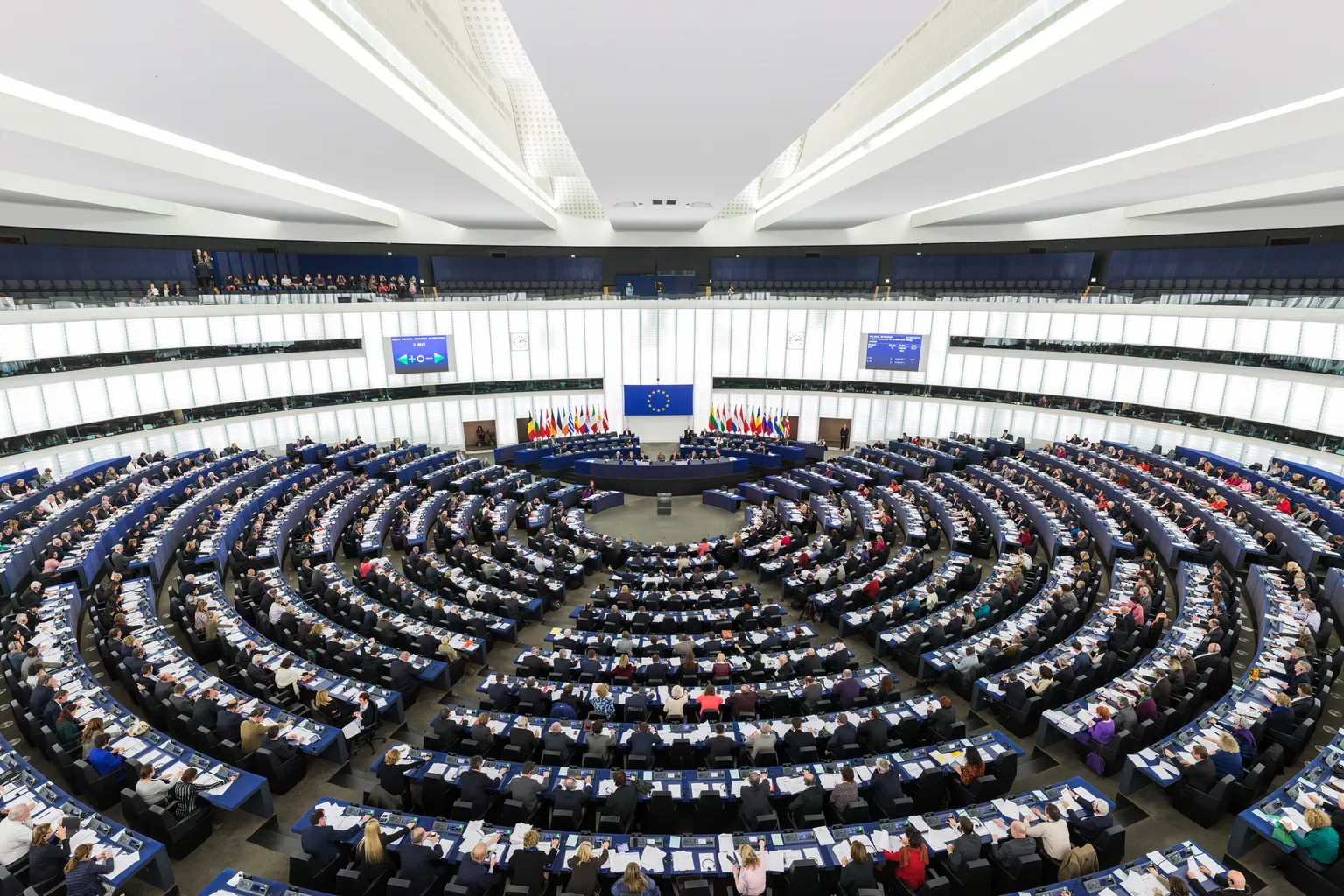
Ursula von der Leyen used her 2026 State of the Union address, delivered in Strasbourg on September 16, to announce that the European Commission would propose the EU Kids Act. The official transcript, mirrored by the EU delegation to Turkiye and marked "check against delivery," has her framing the problem in plain numbers first: "Young Europeans now spend four to six hours per day on screens. Children are pulled ever deeper into feeds designed to keep them scrolling." She followed with a sharper line: "What we are witnessing is a great capture of our children. A capture of their attention, their focus, their minds. This is depriving children of their childhood." At the moment of the speech, the announcement and the formal legislative text were still two separate steps: von der Leyen said "tomorrow" the Commission would propose the act, meaning the written text was expected on September 17, a day after the speech itself.
She also named a specific case, stated plainly and on the record in an address to the European Parliament. Oléa, a 14 year old girl living in Belgium, took her own life one month before the speech after online bullying. Von der Leyen quoted her mother directly, in French: "Je suis persuadée que sans ces réseaux omniprésents, ma fille serait toujours là. C'est trop." The line translates to "I am convinced that without these omnipresent networks, my daughter would still be here. It's too much." Von der Leyen's reply was short: "She is right. C'est trop. Enough is enough." The Commission president also said she had convened a Special Panel of experts, spoken with young people directly and looked at what Australia and other countries had already done before deciding it was time for Europe to act.
Three Age Bands, One Reversed Burden
The EU Kids Act takes what von der Leyen called "a gradual and differentiated approach," with each age band carrying its own protection level rather than one blanket rule for every minor. Under 13, the proposal bars social media access outright. From 13 until a child turns 15, only "mini accounts," set up and supervised by a parent, with limited features and a time restriction, are allowed. From 15 to 18, young people can hold full accounts, but platforms take on a "safe design" obligation as a condition of offering the service to them at all.
| Age band | Rule |
|---|---|
| Under 13 | No social media account of any kind |
| 13 to under 15 | Mini account only, parent-supervised, limited features and time restrictions |
| 15 to 18 | Full account allowed, platform must meet a safe design obligation |
The mechanism underneath the tiers is the real change. "We are reversing the burden of proof," von der Leyen said. "Platforms will have to prove that they are safe. Because it is not about our minors accessing social media. It is about when and how do we allow social media to access minors." As of the speech, the EU Kids Act is an announced proposal, not adopted law. It still has to go through the ordinary EU legislative process with the European Parliament and the Council of the EU, a process the speech did not put a date on, and which typically takes time to complete.
Why This Differs From France, Slovakia and Ofcom
The EU already has national child safety rulings and laws on the books: a French court ruling on age verification, Slovakia's own law, Ofcom's enforcement powers in the UK, plus state level moves in Florida and California. Each of those layers a rule on top of an existing legal framework and asks whether a platform broke it. The EU Kids Act's real novelty is not one more age gate next to those; it is where the proof obligation sits. Under GDPR and the Digital Services Act, EU regulators have generally had to show that a platform broke a rule before they could act against it.
Here the direction runs the other way: platforms must show, before the fact, that their product is safe for minors. That is the detail no single headline about "another EU child safety law" quite captures. If the text survives the Parliament and Council process in anything close to this shape, it hands the Commission a template it can reach for again in other sectors. Consumer facing products well outside social media, games, ed-tech tools and AI chatbots aimed at minors among them, are plausible next candidates once that precedent exists on the books.
What an EU-Facing Consumer Platform Should Watch Next
The practical question for any owner running a consumer platform with EU minors as plausible users is how "prove safety" ends up defined once the formal text, and then the Parliament's and Council's amendments, are on paper. That definition, once it exists, is the one regulators are likely to reach for next, in the next sector, not only in social media. Reading the final text closely, not just the Strasbourg headline, is the useful habit to build now. The United Kingdom sits outside this EU proposal since it left the bloc, and Ofcom's Online Safety Act remains the applicable regime there, but any UK business with EU users still needs to track this bill for them.
A second, broader initiative sits next to the Kids Act but is not the same thing: the Digital Fairness Act, which von der Leyen said the Commission would propose in autumn 2026 to address addictive design for all users, not only minors. "This is why we need a wider framework, the Digital Fairness Act," she said. "Europe has the power to act. It is we who decide our rules, not big tech." Keeping the two initiatives distinct matters, since one is a minors-specific access and design rule moving through the legislative process now, and the other is a broader, all-ages addictive-design framework still to be drafted.
Read next: Google Just Told You Where To List Your Business Now | Google Escapes Breakup - Brussels Still Watching