Hungary's only nuclear plant shut down for the first time in 44 years
Hungary's only nuclear power plant, the Soviet-built Paks facility on the Danube, was shut down completely for the first time in its 44-year operating history over the weekend of August 1-6, 2026. Paks normally supplies close to 40 percent of Hungary's electricity from four reactors. Hungarian Prime Minister Peter Magyar told the country ahead of the final unit's shutdown: "Due to the further drop in the Danube's water level, tomorrow it will be completely shut down for the first time in 44 years." Two of the plant's four units went offline first, around August 1, with the remaining reactors following as river levels kept falling, until the last unit came down by August 6.
The shutdown was independently reported by CNN, NBC News, Al Jazeera and POLITICO's E&E News, all of which corroborated Magyar's account of a plant forced offline by river conditions rather than a technical fault or planned maintenance. Magyar framed the situation as a national supply risk rather than a routine outage, warning that "an energy crisis situation may arise from Monday" and that "coordinated steps and self-restraint will be needed to avoid more severe consequences." That is not the language a government uses for a scheduled refuelling outage; it is the language used when a core piece of national infrastructure has been taken out by conditions outside anyone's control.
Why a river level can shut down a nuclear plant
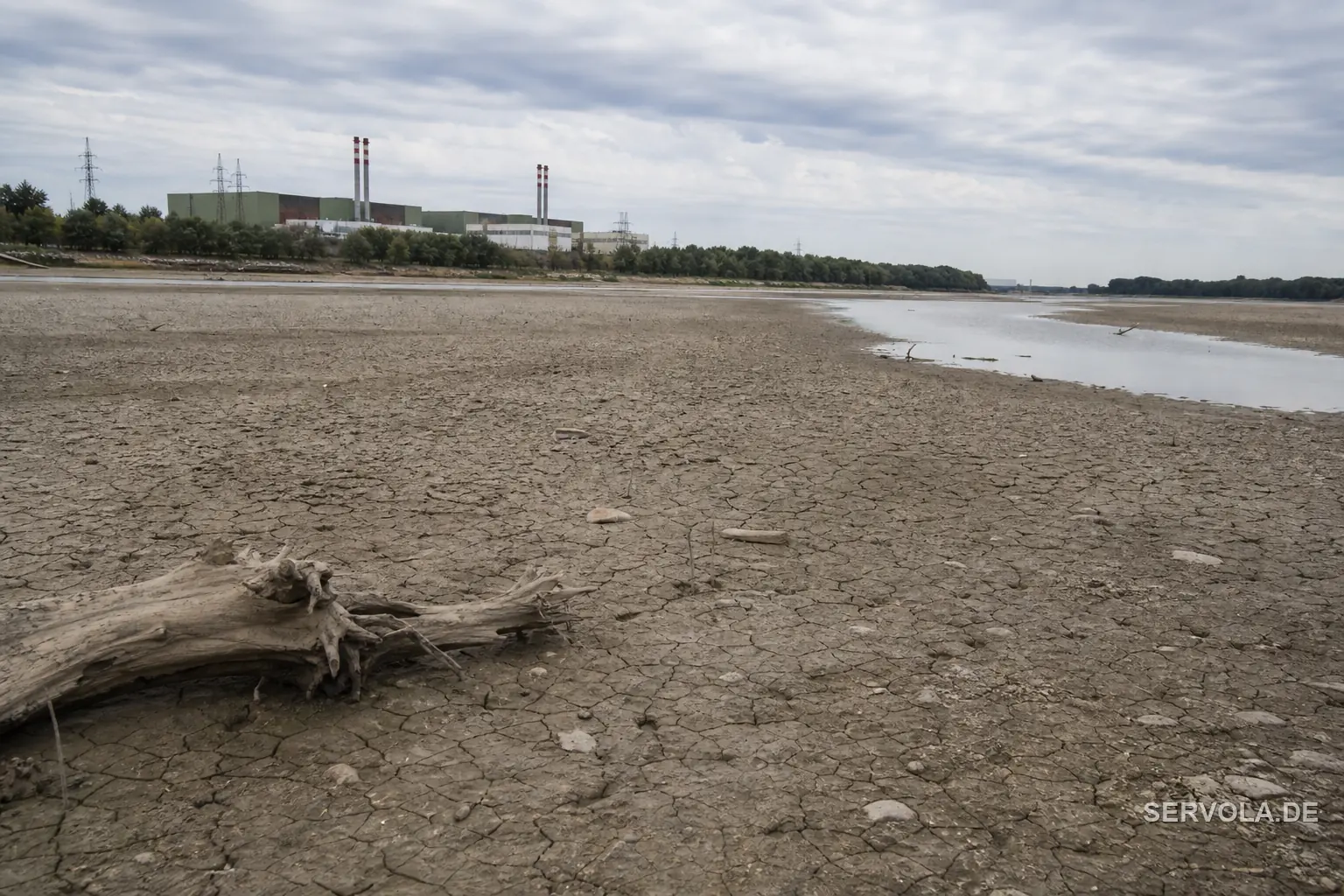
Paks, like most nuclear plants, depends on drawing river water to cool its reactors and condense the steam that drives its turbines. When a river's flow and depth drop far enough, a plant can no longer draw enough cooling water safely, or the water it does draw is too warm to do the job without pushing discharge temperatures past environmental limits. Hungarian authorities set the full-shutdown trigger for Paks at a Danube level of minus 134cm at the plant. That threshold was crossed during the drought week of early August, with levels projected to fall as low as minus 144cm, well past the previous record low of minus 98cm set in 2018.
The gap between those two numbers matters. A 2018 record that did not force a shutdown was overtaken within eight years by a level well below it that did, a fast deterioration for what is supposed to be a rare hydrological extreme. With four reactors off, Hungary has had to lean on gas-fired generation and cross-border electricity imports to cover the shortfall, and regional wholesale power prices spiked to around EUR 500 per megawatt-hour in the days following the shutdown, a level that shows up directly on the invoices of any business buying power on the spot or day-ahead market in the region.
The second cooling-water shutdown in the EU in as many months
Paks is not an isolated incident. In July 2026, France throttled nuclear output and shut some reactors early because warming, low rivers reduced the cooling capacity available to its own fleet, a less severe version of the same physical constraint that has now taken all of Paks offline. Two different national nuclear fleets, in two consecutive months, hit cooling-water limits for the same underlying reason. That is not a coincidence involving one unlucky plant on one unlucky river, it is the same operational constraint showing up in a second country within weeks.
Meteorological patterns on European river levels add a further complication for anyone hoping this is now behind us: Europe's rivers historically run lowest toward late August and September, not early August, which means the drought that shut Paks down has not necessarily peaked. A plant operator or grid planner working from the assumption that a summer's worst cooling-water event has already happened, once the calendar reaches early August, is working from the wrong assumption.
What energy procurement and grid-reliability planning should do differently
The practical implication for any business with exposure to Central European industrial power costs or grid reliability is not about climate policy, it is about planning. Two nuclear fleets hitting cooling-water thresholds within one summer, on the heels of a 2018 Danube record that has already been broken, is enough of a pattern that energy and procurement managers should stop treating each event as a one-off surprise and start modeling drought-driven nuclear curtailment as a recurring line item in late-summer power-cost and reliability forecasts.
For industrial operators and data-centre operators drawing power from the Central European grid, that means asking suppliers and grid operators concrete questions now: how much of contracted supply sits behind river-cooled nuclear generation, what the fallback cost looks like when that generation drops out during a EUR 500-per-megawatt-hour spike, and whether existing power purchase agreements and hedges actually price in a curtailment event of this kind happening again next August, not just this one.
Read next: One Alliance Promises 100 Gigawatts Without Building a Single Plant | Amazon Took a Stake in the Company That Keeps Its Servers Running