A Modder Finds the File Nvidia Has Not Shipped
NBA 2K27 entered early access on PC on August 26, 2026, and its installation folder shipped with a file nobody expected to see this soon: nvngx_dlssnr.dll, a 158 MB library that Windows identifies as NVIDIA DLSSNR version 310.8.0.0. Modder Renan Maniero spotted it first and posted the find publicly the same day.
The file matches the DLSS-NR naming Nvidia's own GeForce driver 610.47 quietly added as hidden Profile Inspector entries back in May, months before any game exposed a way to use them. NBA 2K27 itself does not offer a DLSS 5 or Neural Rendering setting, and Nvidia has not listed the basketball game as a DLSS 5 title, so the DLL appears to have shipped by accident rather than as a planned reveal.
Nvidia first announced DLSS 5 in March 2026, calling it its biggest graphics breakthrough since real-time ray tracing in 2018, and gave developers a fuller technical picture at SIGGRAPH 2026: three separate neural models, labelled Model A, B and C, that a studio can assign to individual scenes, characters or objects rather than applying uniformly across a game.
The Performance Cost Nvidia Has Not Published
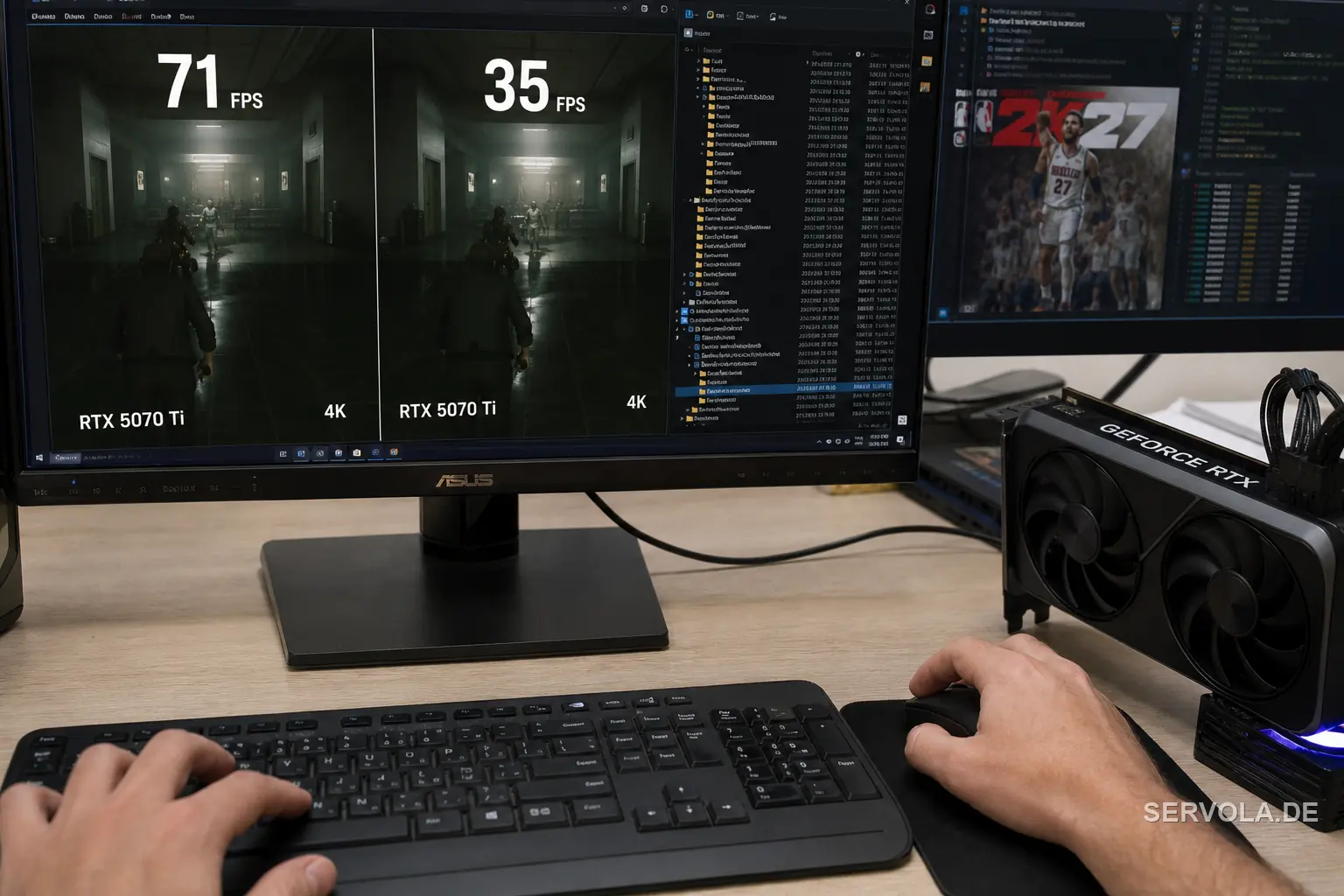
Because NBA 2K27 does not expose the feature, modders copied the leaked DLL into Control, a 2019 title, and unlocked a working set of Neural Rendering sliders, the same intensity, style and auto skin masking controls Nvidia had already described as configurable. Running it produced the first real numbers anyone outside Nvidia has measured.
| GPU | 4K fps, DLSS off | 4K fps, leaked Neural Rendering on |
|---|---|---|
| RTX 5070 Ti | 71 | 35 |
| RTX 5090 | 91 | 50 |
At 4K in Control, a RTX 5070 Ti fell from 71 to 35 frames per second with Neural Rendering engaged, and a RTX 5090 fell from 91 to 50, a 45 to 51 percent hit on Nvidia's own newest cards. Testers also reported the effect visibly altering the game beyond frame rate: deeper shadows, changed skin shading and more lifelike eyes, with character faces described as looking dramatically different while keeping their original structure. None of this is a finished product. The build is unoptimized, nobody has disclosed the exact settings or render resolution used, and Nvidia has months left before its planned ship date to change the numbers.
A Hardware Line Dressed Up as a Software Feature
Two details in the leak point past a single benchmark. First, the DLL responds only on RTX 50-series (Blackwell) cards in current testing, with no confirmed path for the RTX 40-series Nvidia sold from late 2022 onward; Nvidia has not confirmed this is final, but nothing in the leak suggests otherwise. Second, the file itself is not a smarter upscaler in the old DLSS sense, it is a 158 MB local generative model, three times heavier than a DLSS 4 library, because it is repainting lighting and faces rather than reconstructing pixels from existing frames.
Put those two facts together and DLSS 5 reads less like a driver update and more like a hardware generation boundary set a full product cycle early: an RTX 40-series owner who paid full price within the past two to three years gets no upgrade path to this feature at any settings level. A German buyer weighing an upgrade this fall should budget accordingly. A RTX 5070 Ti currently retails for roughly EUR 900 to 1,100, a RTX 5090 for EUR 3,500 and up, and an unfinished build has already measured a 45 to 51 percent frame-rate cost at 4K on both. Until Nvidia publishes its own numbers on optimized, shipping hardware, treat the fall 2026 launch date as a marketing target, not a verified benchmark.
We do this for everyone trying to keep up with what technology is doing to our lives. The people who build it, and the people it happens to. The Servola Journal exists so that what we learn belongs to all of them.
Nobody pays us for this. No ads, no paywall, free to everyone. We just believe that understanding what's happening to all of us shouldn't depend on who can afford to pay for it.
If it gave you something today, tell us to keep going. Follow us, leave a like, or write a positive comment. We read every one, and they are what keeps us going.
Read next: Nvidia Walks Back DLSS 5 Exclusivity Within Days of Launch | DLSS 5: New Cards Only, and a Third Less FPS