Bloomberg's Report: A Direct Notice From Nvidia to Its Biggest Customers
Nvidia has notified Microsoft, Google, and Oracle that servers built around its AI chips will cost more than 15% extra in many cases, Bloomberg reported on August 22, 2026, citing people familiar with the matter. The increases apply to systems built on Nvidia's Vera Rubin and Grace Blackwell chip lines, with the exact size varying by chip generation and memory configuration, for systems shipping from early 2027. Bloomberg said the notice reached Microsoft, Google, and Oracle through Nvidia's server contract manufacturers, not directly from Nvidia.
Nvidia did not respond to Bloomberg's request for comment outside regular business hours, and Reuters said it could not independently verify Bloomberg's report. Nvidia is scheduled to report second-quarter earnings on August 26, 2026, four days after the report broke, and has not addressed the pricing matter on the record.
The Bill of Materials: Why Memory Ate the Rack
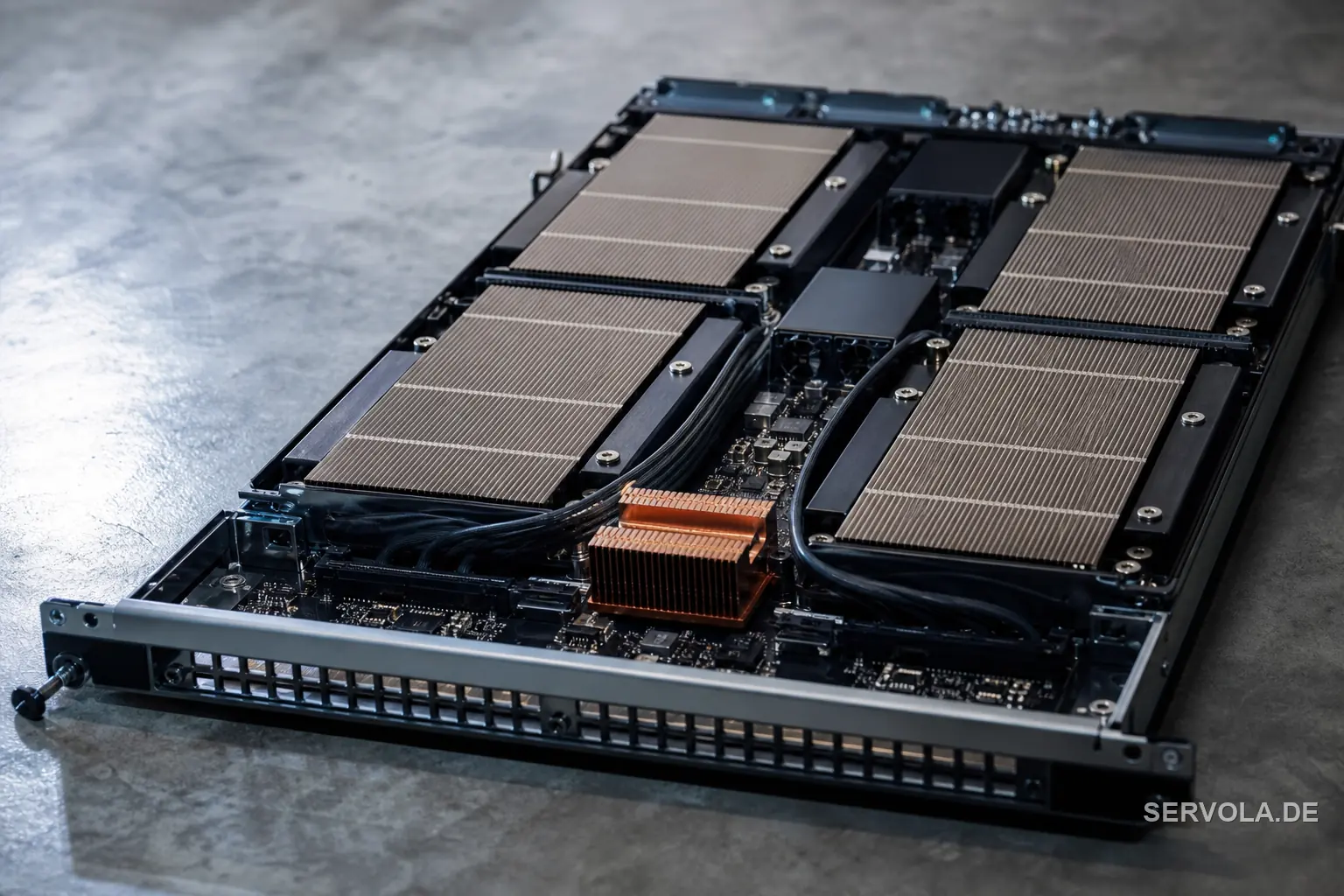
Morgan Stanley Research's bill-of-materials analysis, cited by multiple outlets and dated around July 6, 2026, found that a Vera Rubin VR200 NVL72 rack costs approximately $7.8 million to build, versus about $4 million for the prior-generation Grace Blackwell GB300 NVL72 rack, nearly double. Memory's share of the rack's bill of materials rose from roughly 5-10% to 25-30%, or about $2 million per rack, a 435% year-over-year jump.
That shift is driven by a roughly threefold increase in memory capacity, to about 54 terabytes per rack of LPDDR5X, plus roughly $1 million or more in 3D NAND storage that earlier systems mostly lacked. GPU cost share of the rack fell from about 63% to about 51% as memory ate a larger share of the total bill.
| Metric | Grace Blackwell GB300 NVL72 | Vera Rubin VR200 NVL72 |
|---|---|---|
| Rack bill-of-materials cost | about $4 million | about $7.8 million |
| Memory share of rack cost | roughly 5-10% | roughly 25-30% (about $2 million) |
| GPU share of rack cost | about 63% | about 51% |
| Memory capacity per rack (LPDDR5X) | roughly a third of Vera Rubin's total | about 54 terabytes |
Why the Increase Won't Show Up as a Line Item
Every AI memory-cost story to reach the public so far in 2026 has surfaced at the edge of the supply chain, in a console price tag or an API price sheet, not at the source. This is the first time the increase has been caught at the source: Nvidia telling its three biggest cloud customers directly, in a contract notice, four days before its own earnings call.
That timing means the cost will not arrive as a visible line item for the millions of EU and UK businesses that rent AI compute from Azure, Google Cloud, or Oracle Cloud starting in 2027. It will instead be quietly absorbed into per-hour or per-token cloud pricing, the same way it always is when a cost increase happens two layers upstream of the actual buyer.
The Owner Consequence: Lock In 2026 Pricing Before It Rolls Over
Any business budgeting multi-year AI or cloud compute spend should treat 2026 as the last window to lock in reserved or committed-use pricing before the 2027 hardware generation, and its cost, rolls into standard rates. Waiting for a renewal quote to explain the increase will not work, because a cloud vendor is unlikely to name Nvidia when the price goes up.
The underlying mechanism is corroborated independently of Bloomberg's sourcing: Morgan Stanley's bill-of-materials analysis, built from public component pricing rather than an unconfirmed contract notice, points to the same memory-driven cost pressure. Nvidia has not confirmed Bloomberg's report, but the direction of the cost curve does not depend on Nvidia confirming it.
Read next: Europe's Quantum Hardware Now Compiles Through Nvidia | Nvidia Stopped Renting Its CPU Core From Arm