The feature has been gone for eighteen months
On 21 February 2025 Apple stopped offering Advanced Data Protection to new users in the United Kingdom and told existing UK users they would eventually have to switch it off. The company's own support note is unusually blunt for a document of that kind: Apple can no longer offer the feature in the UK. It did not soften the reason, and it did not offer a replacement.
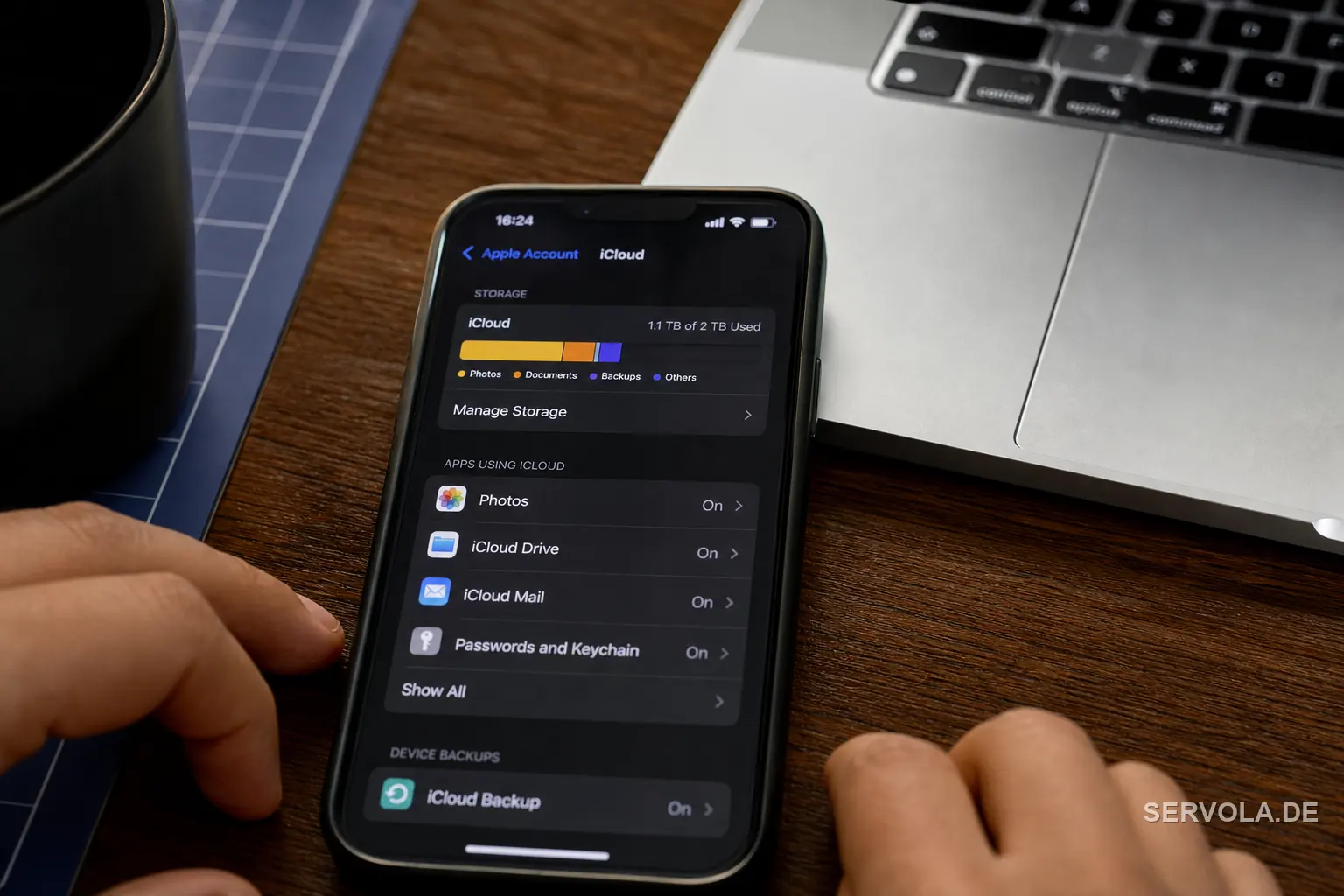
What the feature does is worth restating, because the headline word encryption is doing a lot of work. Without Advanced Data Protection, iCloud still encrypts your data, but Apple holds keys it can be compelled to use. With it, the number of data categories under end-to-end encryption rises to 25, and iCloud Backup is one of them. An iPhone backup contains most of what is on the phone. That is the category that changed hands in February 2025, and it has stayed changed every day since. Messages in iMessage and calls on FaceTime remain end-to-end encrypted everywhere, including Britain, which is why the loss is easy to miss: the visible things still look protected.
The second notice was written to remove America's veto
The order Apple is now fighting is not the one it fought in 2025. The Home Office's first technical capability notice reached the data of American as well as British customers, and that reach is what defeated it. Washington objected, the diplomatic cost climbed, and in August 2025 the UK backed down. The notice issued afterwards asks for the same architectural thing and asks for it only in respect of UK users.
Read that as engineering rather than diplomacy and the design becomes clear. The first attempt failed on a jurisdictional fact, not on a principle, so the second attempt removed the jurisdictional fact. Nobody in Washington now has standing to be annoyed on a British company's behalf. Apple's technical argument has not changed and does not depend on scope, because a key that exists can be compelled, copied or stolen regardless of which passports its intended targets hold. But the political argument that actually worked last time has been engineered out of the problem.
A case that neither side is allowed to describe
Apple filed its new complaint with the Investigatory Powers Tribunal in July. That is the same forum, and the same statutory machinery, as the challenge Liberty and Privacy International brought under section 253 of the Investigatory Powers Act. Neither Apple nor the Home Office may comment publicly on a technical capability notice; the secrecy is not a choice either party made.
How much becomes public is itself contested. At a hearing in March 2025 the Home Secretary argued that national security would be threatened by publishing even the bare details of the case, including the names of the parties, and the Tribunal rejected that. Tessa Gregory, acting for the claimants, welcomed the refusal in those terms. Akiko Hart of Liberty put the stake in ordinary language: end-to-end encryption protects bank details, health information, private conversations and images. The Liberty and Privacy International case is listed to be heard in December, so December is the first month in which an outsider learns much of anything.
What to settle before December
Treat the current position as the planning assumption rather than a temporary irregularity, because it has already outlasted most people's memory of it. If your organisation issues UK-region Apple accounts, device backups for those accounts are not end-to-end encrypted and have not been for eighteen months. That is a fact about your estate today, not a risk that might arrive after a judgment.
Two things are worth doing while the tribunal is quiet. Establish which region your company's Apple accounts are actually registered to, since availability follows the account, and an organisation with staff in several countries will find its exposure is not uniform. Then decide, deliberately, whether device backups are the right place for the material that matters most to you, given that in one of your jurisdictions the provider holds usable keys. That decision does not need a verdict. It needs an inventory.
Read next: Apple's Real-Photo Proof Ships Everywhere Except EU | Siri AI Ships Worldwide, but Europe Still Waits