The line item that contradicts thirty years of Apple
Apple reported its June quarter on 30 July: revenue of 109.42 billion dollars, up 16 percent, net income of 29.79 billion, up 27 percent, iPhone up 22 percent and Mac up 29 percent. The number that moved the stock was not in that list. Inventory stood at 11.1 billion dollars against 5.7 billion at the end of the last fiscal year in September, and the shares fell about 6 percent after hours.
Set that against what Apple is. The company's operational reputation was built on not holding inventory, on a supply chain tuned so finely that components arrived as they were needed and capital was never parked in a warehouse. Tim Cook is the executive who built that machine. Roughly 5.4 billion dollars of additional stock, close to a doubling, is what a buyer does when it has stopped believing it can be served on demand. Stockpiling is not a pricing strategy. It is an admission about availability.
Apple says this is not a supplier problem
The obvious reading is that a supplier let Apple down, and Apple rejected it directly. Cook told analysts this is not a partner or supplier issue and described an incredibly strong iPhone and Mac product cycle, meaning demand arrived above what Apple had forecast. He also said there is less flexibility in the supply chain than normal and that the company is seeing some very significant constraints currently, including on the availability of the advanced nodes its own silicon is built on.
That distinction decides how long this lasts, and almost nobody is drawing it. A shortage caused by damaged or missing capacity ends when the capacity returns, and you can watch for that date. A shortage caused by an industry forecasting demand too low ends only when the forecasts are rebuilt and the resulting orders work through lead times that run quarters, not weeks. Apple is describing the second kind. Anyone budgeting hardware on the assumption that this eases in the autumn is planning against the wrong mechanism.
A hundred-year flood, and three firms selling the water
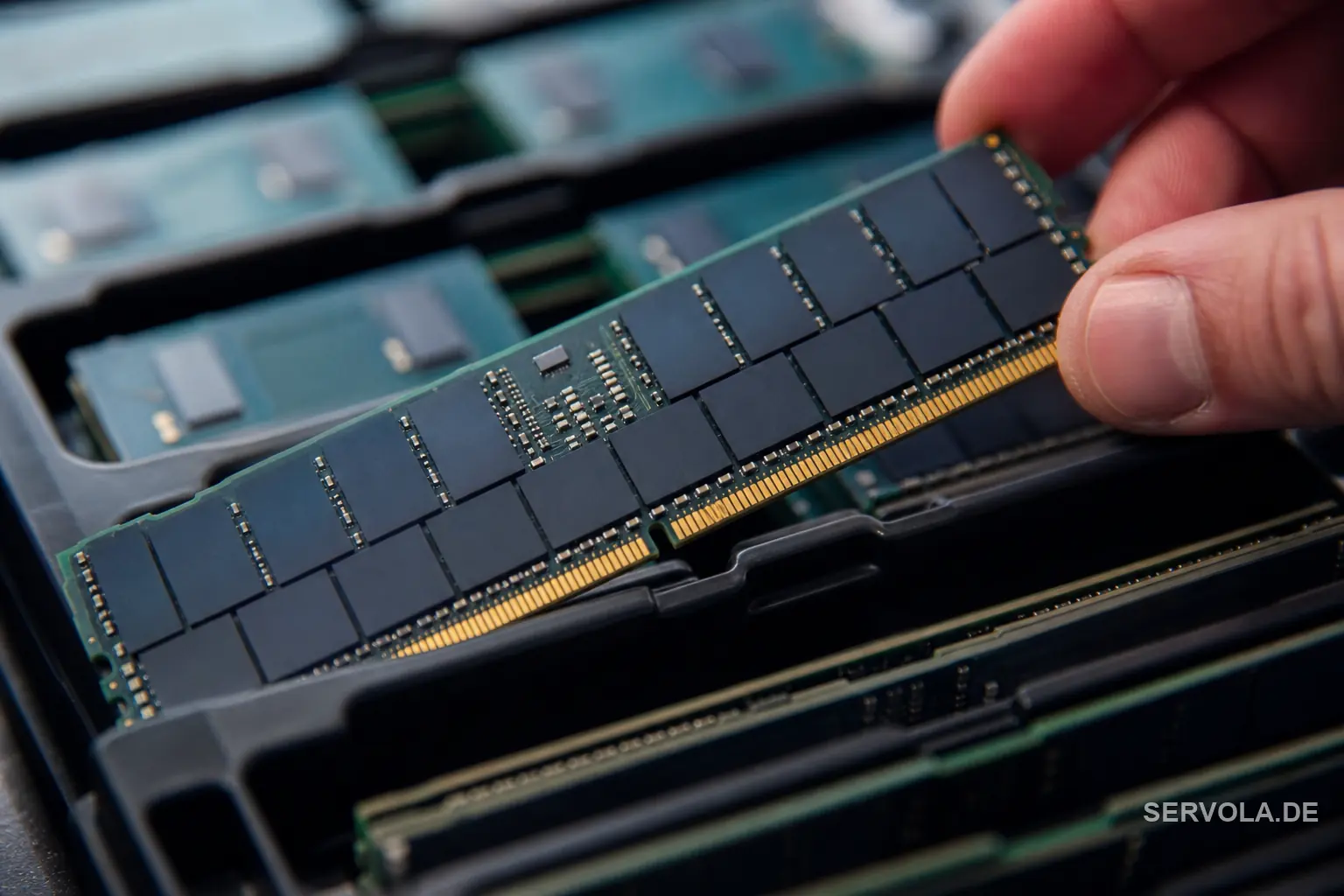
On memory, Cook used a phrase that will outlive the call: a hundred-year flood on memory pricing. Apple paid more for memory in the June quarter than in March, expects to pay more again, and expects market pricing to keep climbing past September. It has already acted on that, raising Mac and iPad prices in June, which Cook characterised as a reluctant move. Some of the pressure will be offset by the inventory carried in and by lower costs on non-memory components, and Apple was clear that the offset is partial.
Then he named the structural fact that matters more than any of the numbers. There are three major DRAM suppliers, and Cook said that if there were more suppliers it would help Apple on the supply side. Read that as a buyer with more leverage than anyone else in consumer hardware saying its leverage is insufficient. In a three-supplier market, allocation is not won by asking. It follows prepayments, multi-year commitments and volume, and Apple outbids on all three. Everyone smaller sits behind Apple in that queue, which is the part of this story that lands on a mid-sized European buyer.
What the guidance says once the currency is removed
Apple guided September-quarter revenue growth of 9 to 11 percent and told analysts that foreign exchange is a 2.5 percentage point headwind. Add that back and the underlying guide is roughly 11.5 to 13.5 percent, against the 16 percent Apple had just delivered. So the company is guiding a slowdown of about three to five points on a constant-currency basis, in a quarter that contains new iPhone models, and attributing it to what it cannot buy rather than what it cannot sell. Cook said the impact from supply constraints will increase significantly sequentially.
That is an unusual shape for a guide and it is worth stating plainly, because a demand problem and a supply problem look identical in a revenue forecast and lead to opposite decisions. If Apple were signalling weak demand, a buyer would expect discounting into the winter. Because Apple is signalling constrained supply into record demand, the rational expectation is the reverse: firmer pricing, longer lead times on configurations with more memory, and allocation favouring the highest-value models. The 11.73 billion dollars Apple spent on research and development in the quarter tells you it is not slowing down; it simply cannot buy fast enough.
What a European buyer settles before the 2027 refresh
Three things are worth fixing while the quarter is fresh. First, get memory configurations decided and priced now rather than at order time, because the specification that carries more memory is the one that moves most on price and on lead time. Second, ask any hardware supplier to put the memory component of its quote in writing with a validity date, since a quote without one is a forecast rather than a price. Third, treat the June increases on Mac and iPad as the template rather than the exception, and note that they reached euro and sterling list prices along with everything else.
The wider point applies well beyond Apple. Samsung, Microsoft, Sony and Meta have all raised hardware prices over memory costs in the same stretch, so this is a component market repricing rather than one vendor's difficulty. Anyone specifying laptops, handsets, servers or edge devices for 2027 is buying into that market, and the buyer with the most negotiating power on earth just told the world it is holding stock and expects to pay more. Take the hint literally, order earlier than feels comfortable, and stop treating component cost as a rounding error in the device budget.
Read next: Apple's New CEO Chose a Ship Date Over a Strategy | Apple's Price Hike Has A Memory Chip Fingerprint On It