A $15 Billion Project Built Next to a Wildlife Sanctuary
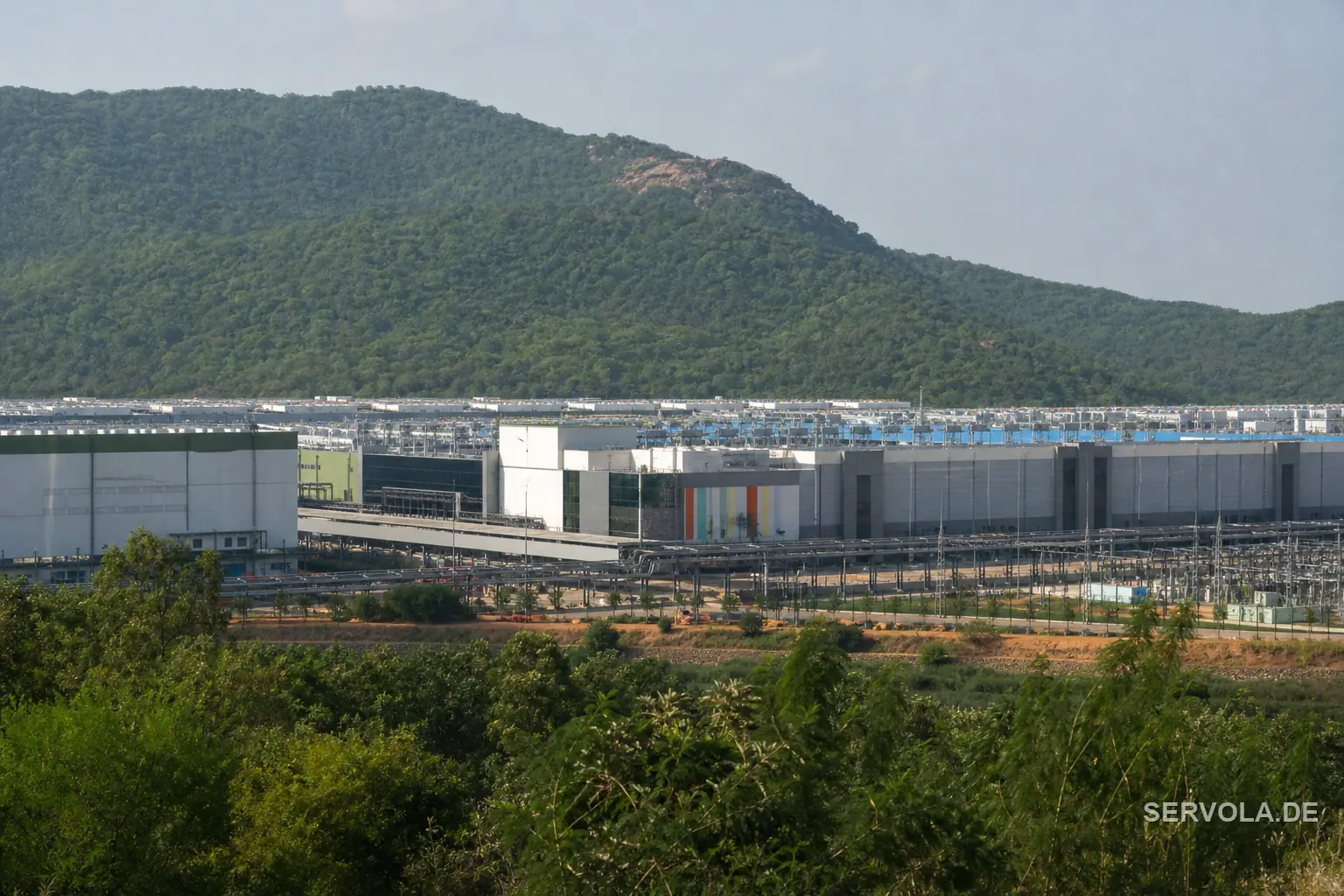
Google's planned data centre hub in Adavivaram and Mudasarlova villages, in the Visakhapatnam Rural mandal of Andhra Pradesh, is a $15 billion commitment developed together with Gautam Adani's group, first announced in October 2025. State officials and the companies project it will create up to 188,000 jobs over the build-out. Construction is already visible on the ground: a hillside above the site has been stripped and terraced, and site clearance is under way even as the legal process continues.
The friction point is distance. The Kambalakonda Wildlife Sanctuary, home to leopards and pangolins, lies roughly 860 metres from the construction site and sits inside a notified Eco-Sensitive Zone. State officials maintain the project meets all legally required buffer distances; Google has said it will add sound-dampening measures to limit disruption to the sanctuary during construction.
The Court Case and the Water Math
The Andhra Pradesh High Court has asked the state government to respond to a public-interest litigation filed by the activist group Jal Biradari, which argues the project will add pressure to a nearby reservoir and strain water availability for the wider city. The next hearing is scheduled for August 24, 2026. Separately, the Human Rights Forum has filed three additional cases before India's environmental court, arguing that regulators cleared the project under a lower-scrutiny environmental category without properly assessing its effect on a rural drinking-water scheme, and is seeking a halt to construction.
The water numbers explain the anxiety: Visakhapatnam receives about 410 million litres of water a day against a stated requirement of 480 million, a city of 2.5 million residents that already lives with periodic rationing. The state has promised the project a guaranteed 20-year water supply. Google, in a statement to Reuters, said it will use advanced air cooling to protect local water resources and will develop the site in line with applicable law. The state government has called activists' concerns incorrect and misleading, while saying it remains open to feedback.
What European Data-Centre Planners Should Take From Vizag
None of this changes anything for Google's operations in Europe today, and it should not be read as a story about India's courts being unusually hostile to investment. It is worth reading as a preview of a pattern that European and British data-centre developers are already starting to meet as AI infrastructure buildout accelerates: projects sited near power and land availability, not near easy permitting, increasingly land close to protected habitat or water-stressed catchments, and increasingly get contested there. The EU's Habitats Directive and environmental impact assessment rules, and the UK's protected-site regime and Environment Agency abstraction consents, give European authorities more formal tools than an Indian PIL, but the same underlying dynamic still applies: legal clearance to build does not end the public argument over whether a site should have been chosen at all, and objections can run alongside construction rather than stopping it outright.
The practical lesson for an operator or planning authority is to treat proximity to protected land and local water stress as an underwriting-stage risk to price before groundbreaking, not a compliance box to tick after the site is already picked, and to expect that a granted permit buys construction time, not the end of scrutiny. The Netherlands already lived through a version of this earlier this decade, pausing new hyperscale data-centre development over land, grid and water concerns after local opposition to a large planned facility helped sink it. Vizag is the same argument in a different courtroom.
Read next: Google Just Told You Where To List Your Business Now | Google Escapes Breakup - Brussels Still Watching