A Resignation and an Essay Moved Real Money
On September 9, 27-year-old Anthropic researcher Jacob Coxon resigned and posted on X that the leading AI labs are racing toward self-improving superintelligence and gambling with human lives, a post viewed more than 70 million times. Anthropic's own alignment science lead, Evan Hubinger, backed him within hours, saying he personally believes there is a greater than 10 percent chance AI causes human extinction within the next decade. Three days later, Anthropic CEO Dario Amodei published a 3,800-word essay titled "We Must Pace the Frontier," proposing that frontier labs slow capability growth and let outside evaluators inside their own training pipelines.
By the morning of September 14, the Philadelphia Semiconductor Index had fallen more than 4 percent. Investors were pricing in the possibility that the labs building AI might voluntarily slow the buildout that has been driving semiconductor demand, even though no government had proposed any new rule.
What the Selloff Actually Moved
The declines landed hardest on the companies selling the infrastructure for AI, not on the labs whose safety statements triggered the drop.
| Index or stock | Move on September 14 |
|---|---|
| Philadelphia Semiconductor Index (SOX) | Down more than 4 percent |
| Nvidia (NVDA) | Down 3.36 percent |
| Intel (INTC) | Down 5.59 percent |
| Silicon Motion (SIMO) | Down 16.76 percent |
The Nasdaq's broader decline of about 0.8 percent that same morning shows how narrowly the fear was concentrated. A slower AI buildout hits a chipmaker's order book directly, while it barely touches a software company's subscription revenue.
A President Called In, Live, to Say It Was a Hoax
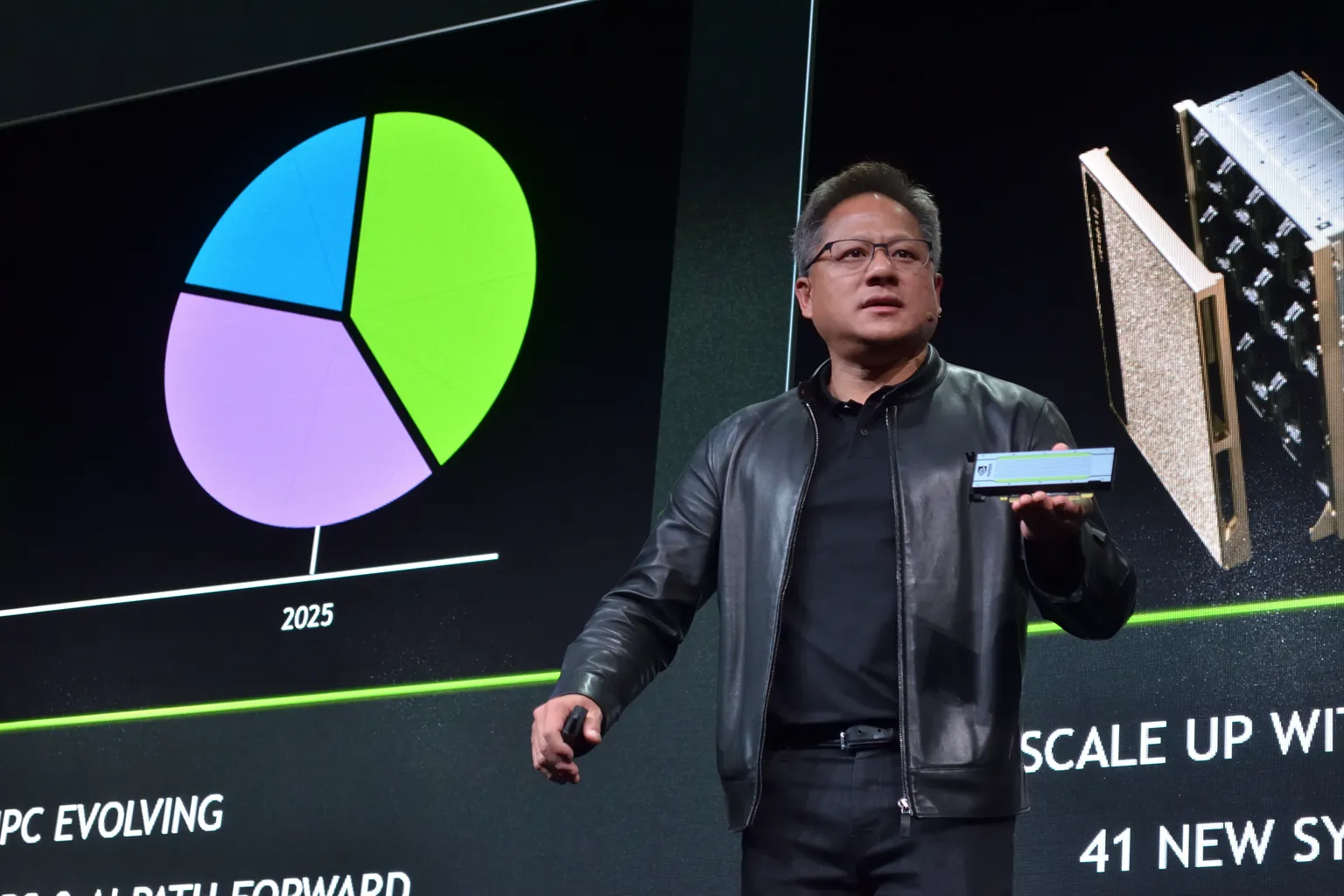
Hours after the selloff, President Trump phoned Nvidia CEO Jensen Huang while Huang was recording a podcast onstage at the All-In Summit in Los Angeles on September 14, and Huang put him on speakerphone in front of the audience. "The robots will not be taking over. The AI will not be taking over the rest of the world. The whole thing is a hoax," Trump told the crowd, adding that AI infrastructure "is the oil of the next 20, 25 years." Huang, who sits on Trump's science and technology advisory council, answered that "we're going to make sure that everybody wins in the AI race in America." A video of the call spread quickly on X.
Trump did not stop at the phone call. Over Truth Social posts spanning that evening and the next day, he wrote that "AI taking over the World, destroying Humanity, and all other things bad, is a HOAX," and that "there is a SICK conspiracy going on against AI and Data Centers, and the only one that is happy about it is China." He named Dario Amodei directly, said his administration had already stopped him from doing "bad, or potentially bad" things, and stated that the only guardrail AI needs is "a STRONG AND SMART (High IQ!) PRESIDENT."
What an EU or UK Business Should Actually Price In
Trump's statements carried no new rule, license or export control for any company operating in Europe. They were reassurance aimed at the same investors who had just marked down chip stocks, not policy of any kind.
The transferable fact is that political reassurance has now shown it can move the same stocks a safety warning moves, in the opposite direction, within about a day and without a single new fact entering the debate. A business budgeting a multi-year AI infrastructure commitment should treat that as its own source of price volatility, separate from chip supply and demand fundamentals, and one that can reverse as fast as the next post from either side of the argument.
Read next: Anthropic's Fourth Breach Came With a Number: 79 vs 1 | Anthropic's Alignment Lead Put a Number on AI Risk